
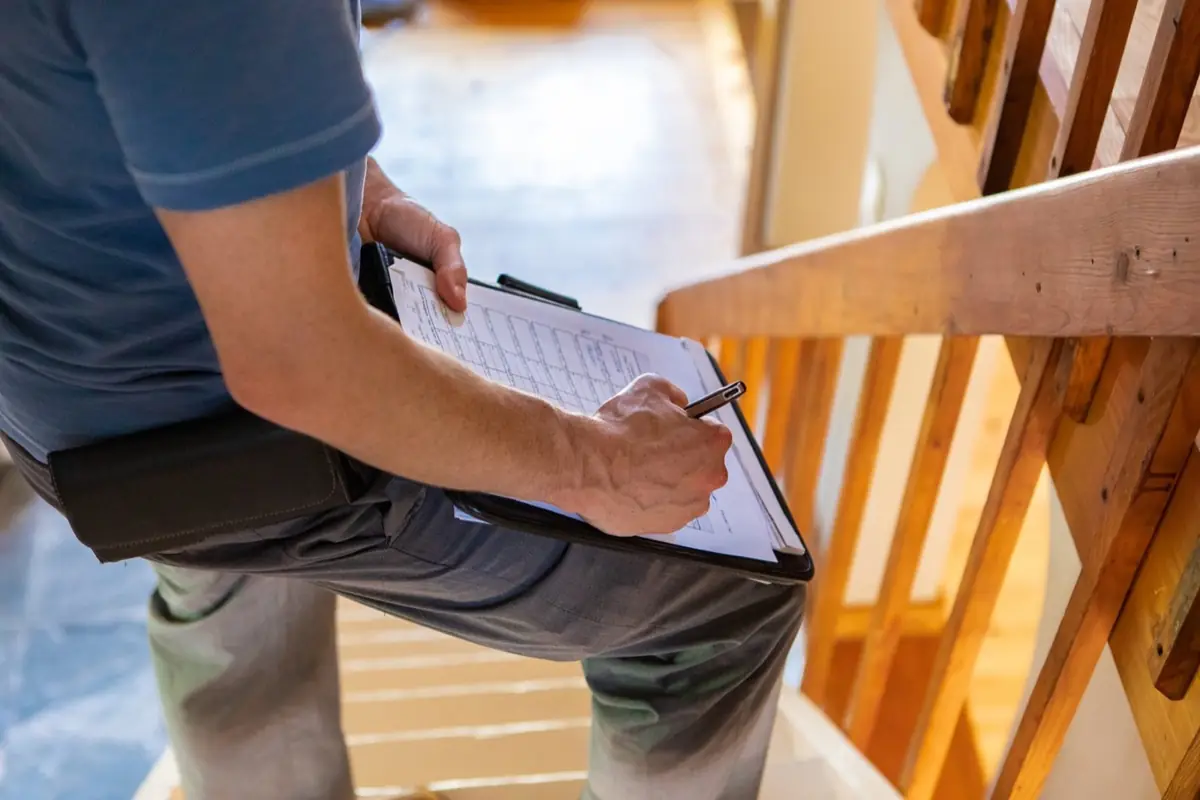
How does a surveyor inspect a house?
A surveyor inspects a house visually and methodically, usually starting outside, working from the roof down, then moving through every accessible room inside, the roof space and the grounds. The inspection is non-intrusive: nothing is opened up, and the surveyor relies on trained observation, the pattern of defects and simple equipment.
The typical kit is a moisture meter, a torch, binoculars for roofs and chimneys, a ladder for the roof space hatch, a spirit level and a camera. Before the visit, the surveyor also checks desk records for the area, such as flood risk, radon, mining and noise, and looks at the property's energy performance certificate.
At a Level 3 Building Survey, the surveyor works through more than a hundred separate checks across the building, and records the construction in more detail than at Level 2.
Ready to book your survey? Get a survey price for the home you are buying.
What does a surveyor look for in the structure?
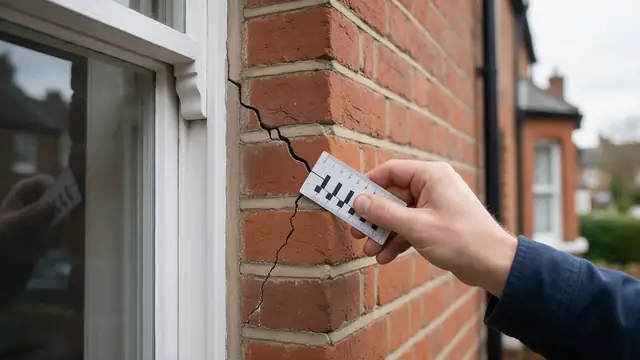
In the main structure, a surveyor looks for signs that the building is moving or has moved: cracks, bulging or leaning walls, distorted door and window openings, and floors that slope or dip.
- Cracks: their width, shape, direction and position. Tapering diagonal cracks near doors and windows, and cracks that run through bricks rather than mortar, point to movement in the foundations or ground.
- Walls: bowing, leaning or bulging, missing or failed wall ties, and lintels (the beams over openings) that have dropped.
- Chimney breasts: whether a breast has been removed inside without proper support for the masonry above.
- Alterations: knocked-through rooms, extensions and loft conversions, and whether they show signs of strain.
- Construction type: whether the house is traditional brick or block, or a non-traditional system such as precast concrete, steel frame or timber frame, because each has its own known weaknesses.
At a Level 3 survey, the surveyor gives a view on whether cracking is structural or superficial and on its probable cause, for example drains, trees, clay soil or a failed lintel. At Level 2, significant movement is reported and referred on for further investigation.
What does a surveyor check on the roof?
On the roof, a surveyor checks the covering, the chimneys and the rainwater goods from the ground and from any safe vantage point, then looks at the timbers and underside of the covering from inside the roof space.
- Slipped, cracked or missing slates and tiles, and a sagging or uneven roof line.
- Ridge and hip tiles, valleys, verges and flashings, where leaks most often start.
- Chimney stacks: leaning, eroded pointing, cracked pots and failed flashings.
- Flat roofs: ponding water, splits, blisters and the age of the covering.
- Gutters and downpipes: leaks, blockages and poor falls that send water onto the walls.
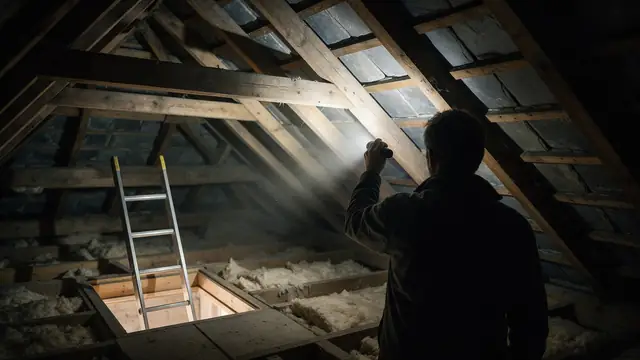
- In the roof space: rafters and purlins, signs of leaks, condensation, woodworm, insulation and ventilation.
A surveyor enters the roof space where there is a safe, accessible hatch. Stored belongings, boarded floors and deep insulation limit what can be seen.
How does a surveyor check for damp?
A surveyor checks for damp by looking for its visible signs and by taking readings with a moisture meter on the surface of walls, especially at low level, around windows, under chimney breasts and beneath bathrooms and kitchens.
The aim is to tell the three common kinds of damp apart, because each has a different cause and remedy:
- Rising damp: ground moisture rising through walls, often where a damp-proof course is missing, failed or bridged by raised ground or rendering.
- Penetrating damp: rain getting in through walls, roofs, chimneys, windows or leaking gutters.
- Condensation: moisture from everyday living settling on cold surfaces, often with black mould and poor ventilation.
The surveyor also looks outside for the causes: ground levels against the walls, blocked air bricks, defective pointing and leaking rainwater goods.
Does a surveyor look for woodworm and rot?
Yes. A surveyor looks for woodworm and rot in every accessible timber: roof timbers, floors, skirtings, staircases, windows and doors.
- Woodworm: small exit holes and fine dust, and whether the activity looks old or recent.
- Wet rot: soft, darkened timber where it stays wet, often around windows, sills and leaking roofs.
- Dry rot: a musty smell, cotton-wool-like growth, rust-coloured spore dust and cracked, shrunken timber.
- Floors: springy or uneven floors, and ventilation to the void beneath suspended timber floors.
What does a surveyor check inside the house?
Inside, a surveyor goes through each room in turn and checks the ceilings, walls, floors, internal joinery and fittings for defects and for evidence of problems elsewhere in the building.
- Ceilings: cracking, sagging, staining from leaks and old lath and plaster that may be loose.
- Walls: cracks, damp staining, hollow-sounding plaster and signs of removed walls.
- Floors: slopes, dips, springiness and squeaks.
- Windows and doors: condition, operation, failed double-glazed units, fire escape windows and safety glass where it is needed.
- Staircases: handrails, balustrades and steep or uneven steps.
- Kitchens and bathrooms: leaks, failed seals, extraction and ventilation.
- Fire safety: smoke alarms, and fire separation where a loft conversion or flat makes it important.
At Level 2, the surveyor opens a sample of windows. At Level 3, the surveyor tries every window where it is possible to do so.
Does a surveyor check the boiler, electrics and plumbing?
A surveyor looks at the heating, electrics, plumbing and drainage but does not test them. The report describes their visible condition and age, flags anything that looks unsafe or out of date, and recommends a specialist test where one is needed.
- Electrics: the age and type of the consumer unit (fuse board), old-style wiring and sockets, and any visible damage.
- Heating: the type and age of the boiler, flue position, radiators and any service records.
- Plumbing: visible pipework, old lead pipes, tanks in the roof space and signs of leaks.
- Drains: where it is safe, the surveyor lifts accessible inspection chamber covers to look at the visible pipework and the chamber walls. Heavy or seized covers are not forced.
At Level 3, the surveyor also observes the services in normal operation, for example running taps and flushing toilets to see that the drains carry water away. At Level 2 the check is visual only. Defective drains matter because leaking drains can wash out the ground beneath a house and lead to subsidence.
What does a surveyor look for outside and around the property?
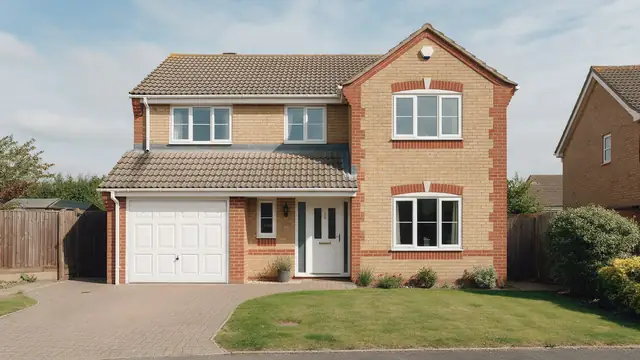
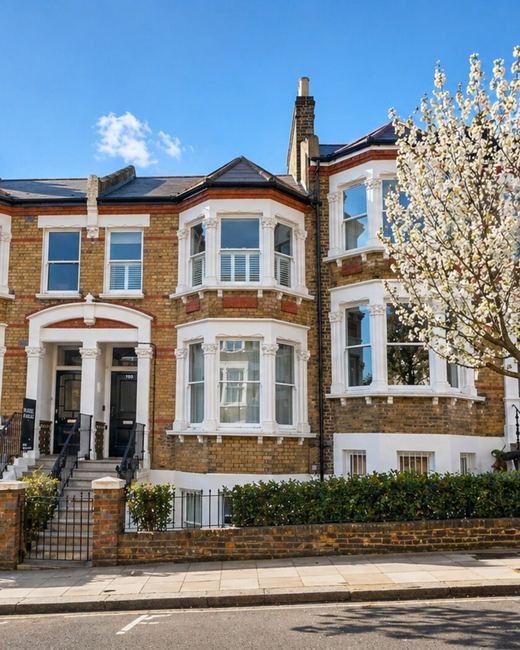
Outside, a surveyor looks at the walls, the grounds and the surroundings for anything that affects the building or its value.
- External walls: brickwork, pointing, render, cladding and any cavity wall insulation.
- Trees: large trees close to the house, especially on clay soils, where roots can draw moisture from the ground and cause movement.
- Grounds: retaining walls, paths, garden walls, fences, outbuildings and garages.
- Boundaries: whether they look clear and match what a buyer would expect, so the solicitor can check them.
- Surroundings: flood risk, sloping or unstable ground, and invasive plants such as Japanese knotweed.
Does a surveyor check for asbestos and other hazards?
A surveyor does not carry out an asbestos inspection, but notes materials in the property that commonly contain asbestos, such as textured ceiling coatings, cement boards and sheets, floor tiles and flue pipes, so that a buyer knows where a specialist's advice is needed.
Known safety hazards are always reported, for example unsafe stairs, missing safety glass, a lack of fire escape routes from upper floors, or signs of a gas or electrical risk.
What legal and planning points does a surveyor pick up?
A surveyor does not act for the buyer legally, but flags anything seen at the property that the buyer's solicitor should check. Typical points are extensions, loft conversions, removed walls and replacement windows that may need planning permission or building regulations approval, shared drives and drains, rights of way, and whether the property is listed or in a conservation area.
What changes between a Level 2 and a Level 3 survey?
Both levels look at the same parts of the house. The difference is how deep the inspection goes and how much the report explains.
| What the surveyor does | Level 2 survey | Level 3 Building Survey |
|---|---|---|
| Purpose | A general condition check that reports significant defects | A detailed inspection of every accessible part of the building |
| Cracks and movement | Reported and referred on | Assessed as structural or superficial, with the probable cause |
| Windows | A sample opened | Every window tried where possible |
| Services | Visual only | Observed in normal operation, such as running taps |
| Roof space | Entered where safe; insulation not moved | Entered where safe and inspected more closely |
| Construction | Briefly described | Described in detail, with repair advice |
| Best suited to | Conventional homes built from 1985 onwards, in reasonable condition, with no structural alterations | Any home, and older, altered, larger or non-traditional homes in particular |
If the age of the house, its construction or past alterations are unclear, a Level 3 Building Survey is the safer choice.
How does a surveyor report what they find?
A surveyor gives each part of the house a condition rating, so the most important problems stand out straight away:
- Condition rating 3: defects that are serious and need repair, replacement or investigation urgently.
- Condition rating 2: defects that need repair or replacement but are not considered serious or urgent.
- Condition rating 1: no repair is currently needed, and normal maintenance continues.
- NI: not inspected, with the reason given.
A buyer can use these findings to budget for repairs, to ask the seller for more information, to renegotiate the price, or in some cases to decide not to proceed.
What can a buyer check before booking a survey?
Before booking, a buyer can check how the house was likely built and what the public records say about it. The free Flettons PropCheck™ tool estimates the property type from the address and photos, and its free PropCheck™ Report sets out flood risk, conservation area and listing, tenure and the energy certificate. That helps in choosing the right survey level.
On a viewing, it is worth looking for the same warning signs a surveyor looks for: cracks around windows and doors, damp staining and a musty smell, slipped roof tiles, leaning chimneys, sloping floors, large trees close to the house, and recent redecoration in one patch of a room. After the survey, the report and its photographs can be kept in the Flettons Plus home history app, building a maintenance record for the house much like a car's service history.
What a survey can — and cannot — tell you
A building survey provides an informed assessment of the visible condition of a property. Inspections are non-intrusive and limited to areas that are accessible at the time of inspection.
A survey brings every part of the house together in one report, links defects to their likely causes and sets out what needs attention first.
- Structural movement, cracking and distortion that can be seen.
- The condition of the roof, chimneys, walls, windows, doors and floors.
- Damp, condensation, rot and woodworm in accessible areas.
- The visible condition and age of the services and drains.
- Trees, boundaries, outbuildings and risks around the property.
- Points for the buyer's solicitor and for specialist follow-up.
However, there are limitations to what a survey can determine without intrusive investigation.
- Fitted floorboards, fixed panels and wall linings are not lifted or removed.
- Heavy furniture, stored belongings and fitted floor coverings limit what can be seen.
- Services are not tested, so their safety needs a qualified engineer or electrician.
- Foundations and buried drains cannot be seen.
- Asbestos cannot be confirmed without samples taken by a specialist.
Where higher-risk indicators are identified, further specialist or intrusive investigation may be recommended.
Frequently asked questions
How long does a surveyor spend at a house?
It depends on the size, age and condition of the house and the survey level. A Level 3 Building Survey of a family home usually takes several hours on site, and a Level 2 survey takes less.
Does a surveyor move furniture or lift carpets?
No. A surveyor does not move heavy furniture or lift fitted carpets and floorboards. At Level 3, the surveyor may lift the corner of a loose carpet where it is safe to do so.
Does a surveyor go into the loft?
Yes, at both Level 2 and Level 3, where there is a safe and accessible hatch. Stored belongings, boarding and insulation limit what can be seen.
Will a surveyor tell me if a crack is serious?
At Level 3, the surveyor assesses whether cracking is structural or superficial and gives its probable cause. At Level 2, significant cracking is reported and further investigation recommended.
Does a surveyor test the boiler and electrics?
No. Services are inspected visually, and at Level 3 observed in normal use, but not tested. The report recommends a Gas Safe registered engineer or a qualified electrician where a test is needed.
Should the seller be at the property?
It is not necessary, but the surveyor needs access to every room, the roof space and the garden. A seller who is present can answer questions about past repairs and alterations.