

Overview
The Weir No-Fines house is a relatively rare post-war non-traditional property type, developed between 1949 and the 1950s in response to acute housing shortages. The system was designed and manufactured by Weir Housing Corporation Ltd, with only around 100 units constructed nationally.

Typical characteristics & construction
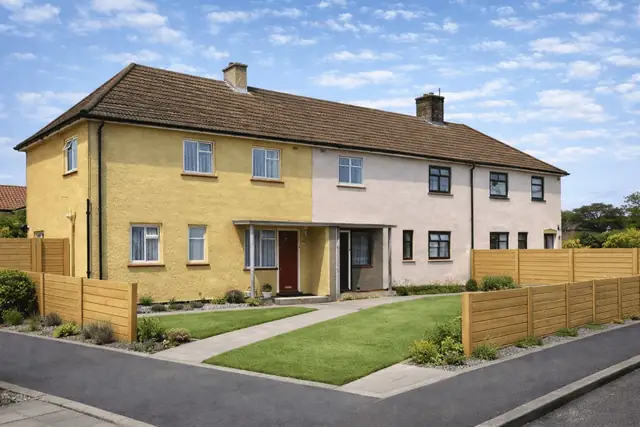
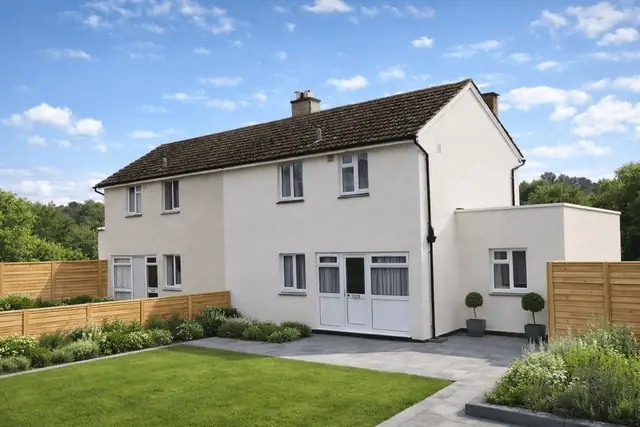
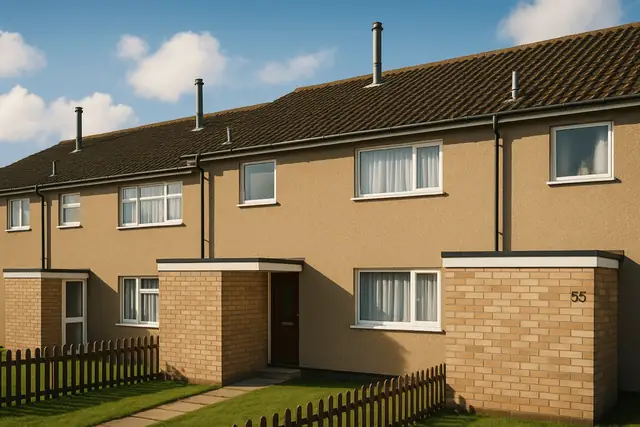
Weir No-Fines houses are generally found in suburban locations and were constructed as two-storey semi-detached or terraced dwellings. They are identifiable by their fully rendered elevations, medium pitch gable roofs covered with tiles, and a flat precast concrete canopy over the front entrance.
| Element | Typical construction | Inspection focus |
|---|---|---|
| Substructure | Concrete strip footings and concrete slab with DPC | Settlement, cracking, damp proof course integrity |
| External walls | 10-inch no-fines concrete with render finish | Cracking, carbonation, moisture penetration |
| Floors | Concrete ground floor, timber first floor on PS beams | Dampness, timber condition, deflection |
| Roof | Timber trusses with felt, sarking and tiles | Covering condition, ventilation, water ingress |
Potential hazards & inspection priorities
The primary risks relate to the long-term performance of reinforced concrete beams at first floor and eaves level. Corrosion of embedded reinforcement can lead to cracking and loss of structural capacity if not identified and managed.
Rendered no-fines walls are also vulnerable to moisture ingress where cracking or failed detailing allows water penetration, increasing the risk of dampness and internal condensation.
Is this house right for you?
A Weir No-Fines house may be suitable for buyers who understand non-traditional concrete construction and are prepared to rely on detailed condition-based assessment rather than assumptions about age alone.
- Commission a full building survey
- Review evidence of concrete repair or maintenance
- Allow for potential thermal upgrades
Mortgage & resale considerations
Mortgage acceptance depends on lender policy, property condition, and the clarity of professional reporting. While the Weir No-Fines house is not classed as defective under the Housing Defects Act 1984, lenders often require detailed survey evidence.
Clear reporting, absence of significant concrete deterioration, and documented maintenance can influence lending and resale confidence.
What a survey can — and cannot — tell you
A building survey provides an informed assessment of the visible condition and construction of a Weir No-Fines house. Inspections are non-intrusive and limited to areas that are accessible at the time of inspection.
- Identify visible cracking to no-fines concrete walls and associated render
- Assess signs of dampness, moisture ingress, and condensation risk
- Comment on roof coverings, drainage details, and external envelope condition
- Review the general condition of accessible floors, ceilings, and structural elements
- Highlight defects that may require repair, monitoring, or further investigation
However, there are limitations to what a survey can determine without intrusive investigation.
- Confirm the condition of concealed reinforcement within no-fines concrete
- Assess hidden structural elements behind finishes or linings
- Determine the full extent of carbonation or internal concrete deterioration
- Inspect areas that are inaccessible or covered at the time of inspection
Where higher-risk indicators are identified, further specialist or intrusive investigation may be recommended.