
What are the main types of patio paving?
The main options are natural stone, concrete pavers, brick pavers and porcelain pavers. The choice depends on budget, the style of the home and how the patio will be used.
| Material | Characteristics |
|---|---|
| Sandstone | Warm tones and natural texture; relatively easy to work with |
| Limestone | Smooth, consistent appearance; shades from light beige to dark grey |
| Slate | Durable and versatile, with a distinctive layered texture; colours include blue, green and black |
| Granite | One of the hardest natural stones; highly durable and resistant to wear and tear; a variety of colours and finishes |
| Concrete pavers | Cost-effective and versatile; wide range of shapes, sizes and colours; durable and easy to maintain |
| Brick pavers | Made from clay in various colours and textures; durable and can withstand heavy foot traffic, suiting patios and walkways |
| Porcelain pavers | Made from ceramic materials; designs include imitations of natural stone and wood; highly durable, stain-resistant and easy to clean |
What should be considered when planning a patio?
Planning starts with how the patio will be used, where it sits and how it will drain. The purpose, whether outdoor dining, entertaining or relaxing, influences the size, layout and features.
- Location and orientation: consider how much sunlight the area receives and the prevailing wind direction. A south-facing patio receives more sunlight.
- Layout and design: the patio should complement the style of the home and garden, with features such as seating areas, planters and lighting.
- Drainage and slope: the patio needs a slight slope away from the home so water drains away and does not pool. Drainage channels or soakaways may be needed to manage excess water.
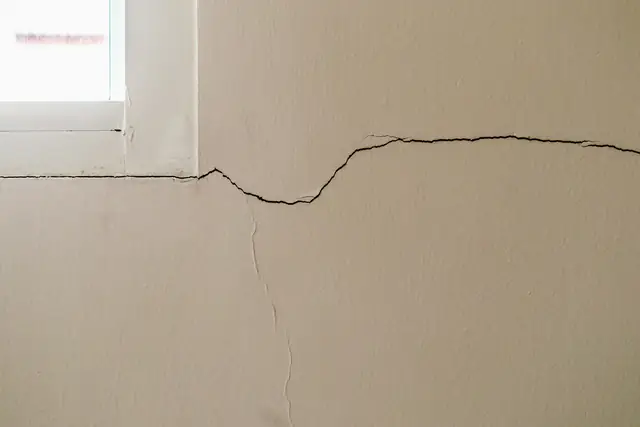
Seen cracks at a home you are buying? Get a survey price for the home you are buying.
How is a patio installed?
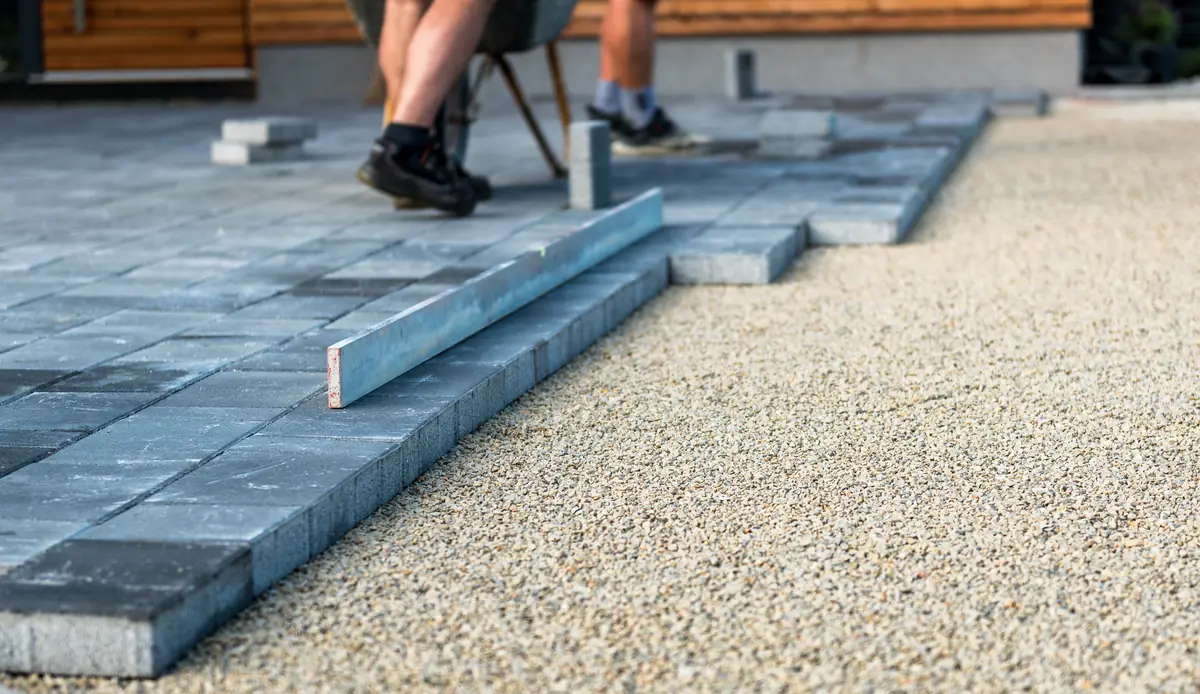
A patio is installed in four stages: preparing the site, laying a compacted sub-base, laying the paving and filling the joints. Installing a patio can be a DIY project, but it requires careful planning and execution.
Step 1: Prepare the site
- Mark the perimeter with stakes and string, and check the area is square or rectangular by measuring the diagonals.
- Remove the top layer of soil to a depth of about 150 to 200mm (6 to 8 inches) to make space for the sub-base and paving.
- Check that the excavated area has a slight slope away from the home for drainage.
Step 2: Install the sub-base
- Spread a layer of hardcore (crushed stone or gravel) about 100mm (4 inches) thick.
- Compact the hardcore with a plate compactor to create a stable, level base.
- Spread a layer of sharp sand about 50mm (2 inches) thick over the hardcore and level it with a straight edge.
Step 3: Lay the paving
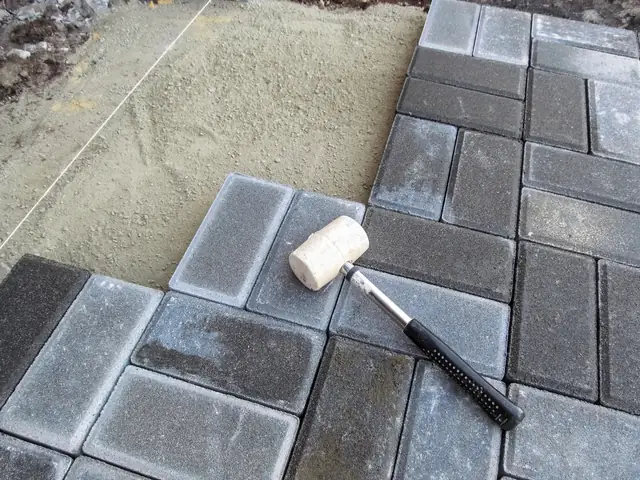
- Start from one corner, placing the pavers on the sand bed so they are level and evenly spaced.
- Use spacers to keep consistent gaps, which allows for proper jointing and drainage.
- Cut pavers to fit around edges and obstacles with a wet saw or angle grinder.
Step 4: Jointing and finishing
- Fill the joints with jointing sand or mortar, sweeping sand into the gaps with a broom until they are completely filled.
- Compact the pavers with a plate compactor so they are firmly set.
- Consider applying a sealant to protect the surface from stains and weathering.
What are the most common patio mistakes?
The most common mistakes are poor planning, inadequate base preparation, incorrect paver installation and neglected maintenance.
- Poor planning and design: can lead to poor drainage, uneven surfaces and inadequate space.
- Inadequate base preparation: can result in uneven surfaces, sinking pavers and poor drainage. The base should be properly excavated, compacted and levelled before the pavers are laid.
- Incorrect paver installation: can cause uneven surfaces, shifting pavers and poor jointing. The manufacturer's instructions, and the right tools and techniques, should be followed.
- Neglecting maintenance: leads to a build-up of dirt, stains and weeds, and to damage to the pavers.
How should a patio be maintained?
A patio needs regular cleaning, weed control, prompt repair of damaged pavers and periodic sealing.
Cleaning
- Sweep regularly to remove dirt, leaves and debris. This prevents a build-up of organic matter that can cause staining and encourage moss and algae.
- Wash the patio periodically with a garden hose or pressure washer to remove dirt and grime that sweeping leaves behind.
- Scrub stubborn stains with a mild detergent and a stiff brush, then rinse thoroughly.
Weed control
- Remove weeds between the pavers by hand, using a weeding tool to pull them out by the roots.
- Consider a weed killer that is safe for use on paving materials, following the manufacturer's instructions.
Repairs
- Replace cracked or damaged pavers promptly to prevent further damage.
- Lift sunken or uneven pavers and add or remove sand from the base to re-level them.
Sealing
- A sealant suitable for the paving material helps protect against stains, weathering and the growth of moss and algae.
- Reapply the sealant every few years to maintain its protective properties.
What features can be added to a patio?
Common additions are outdoor furniture, lighting, planters, a fire pit or heater, and a water feature.
- Weather-resistant outdoor furniture that complements the style of the patio.
- Lighting such as string lights, lanterns or solar-powered lights, which extends use into the evening.
- Planters and greenery, choosing low-maintenance plants that suit the climate; raised planters or vertical gardens save space.
- A fire pit or outdoor heater for cooler months. A fire pit should be safe, easy to use and placed on a non-combustible surface.
- A water feature such as a fountain or pond that suits the garden and needs minimal maintenance.
What to look for when viewing a property with a patio
- Whether the patio slopes away from the house, or whether water appears to pool on it.
- Sunken, uneven or shifting pavers, which can point to a poorly prepared base.
- Cracked or damaged pavers.
- Poor or open jointing, and weeds growing between the pavers.
- Staining, moss and algae, which suggest maintenance has been neglected.
- Drainage channels or soakaways, and whether they appear clear.
What a survey can — and cannot — tell you
A building survey provides an informed assessment of the visible condition of a property. Inspections are non-intrusive and limited to areas that are accessible at the time of inspection.
For patios and paving, a survey can note visible signs of the faults that follow from poor planning, base preparation and installation, especially where drainage is directed towards the house.
- The direction of slope of the patio relative to the house.
- Visible water pooling, uneven or sunken pavers, and cracked or damaged paving.
- The condition of jointing, and weed, moss or algae growth.
- Visible drainage channels.
However, there are limitations to what a survey can determine without intrusive investigation.
- The depth and quality of the hardcore and sand sub-base beneath the paving.
- The condition of soakaways and buried drainage.
Where higher-risk indicators are identified, further specialist or intrusive investigation may be recommended.
Frequently asked questions
How deep should a patio be excavated?
The top layer of soil is removed to a depth of about 150 to 200mm (6 to 8 inches), which makes space for the sub-base and the paving.
How thick should a patio sub-base be?
A layer of hardcore about 100mm (4 inches) thick is spread and compacted, followed by a layer of sharp sand about 50mm (2 inches) thick.
Which way should a patio slope?
A patio should have a slight slope away from the home so water drains away and does not pool.
Why do patio slabs sink?
Sinking pavers and uneven surfaces can result from a base that was not properly excavated, compacted and levelled. Sunken pavers can be lifted and re-levelled by adding or removing sand from the base.
How often should a patio be sealed?
A sealant should be reapplied every few years to maintain its protection against stains, weathering, moss and algae.