
What is a Georgian property?
A Georgian property is one built between 1714 and 1830, during the reigns of the first four King Georges. These are some of the most sought-after homes in the UK, valued for their symmetrical design and historical significance.
Buying one calls for a keen eye for detail and an understanding of the problems that can arise in a building of this age.
What are the typical features of a Georgian house?
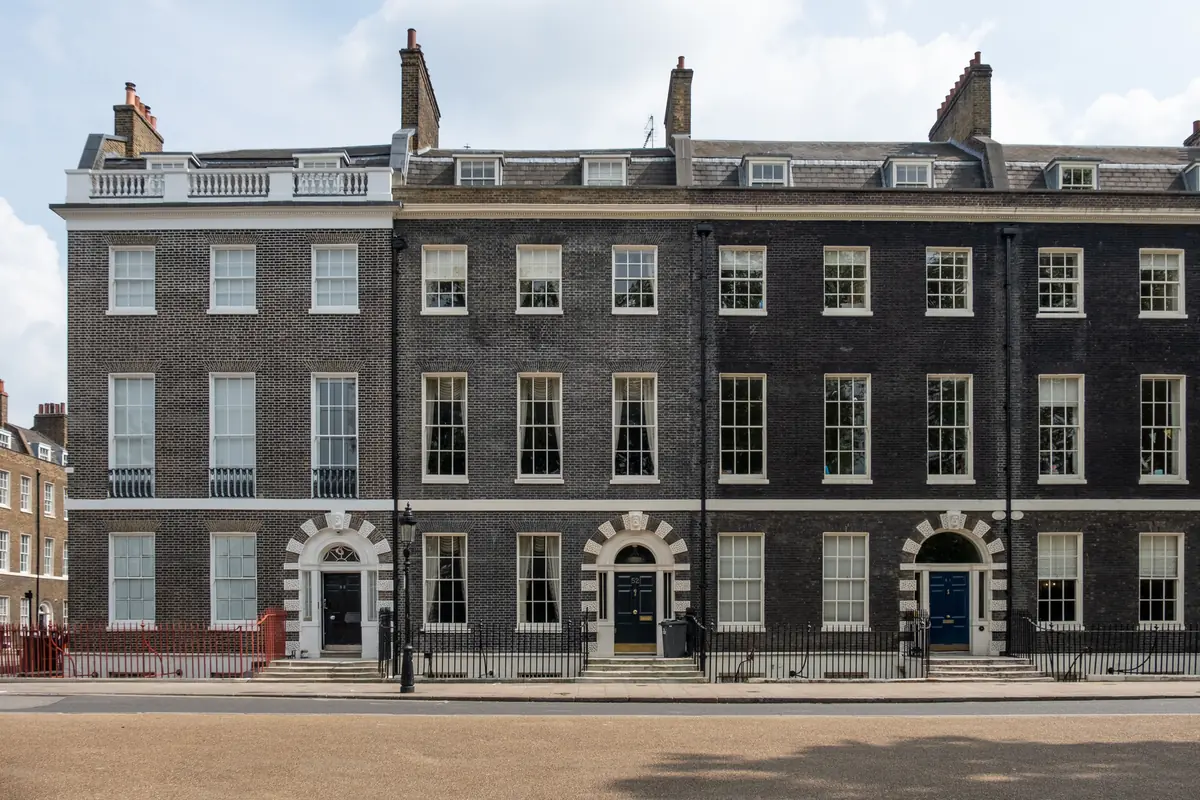
Georgian architecture is known for symmetry and proportion, influenced by classical Greek and Roman architecture.
| Exterior features | Interior features |
|---|---|
| Symmetrical front with evenly spaced windows and a central door | High ceilings, often with intricate cornicing |
| Sash windows (vertically sliding), typically six panes over six | Fireplaces in principal rooms, often with marble surrounds |
| Red or yellow brick, often laid in Flemish bond (alternating long and short brick faces) | Solid wood doors with raised and fielded panels |
| Stucco (render) fronts on some properties, particularly in urban areas | Original wooden floorboards, sometimes hidden under modern coverings |
| Low-pitched or hipped roofs with slate | Cellars or basements, originally used for storage |
| Pediments, pilasters and cornices |
What are the common defects in Georgian houses?
The common defects are structural movement, damp, roof problems, timber decay and outdated plumbing and wiring.
Subsidence and settlement
Over time the ground beneath a property can shift, leading to subsidence or settlement. Signs include:
- Diagonal cracks in walls, particularly around windows and doors.
- Floors that slope or feel uneven underfoot.
- Doors and windows that are difficult to open or close.
Damp and moisture
Damp is a common issue in older properties. It is often caused by:
- Rising damp: moisture rising from the ground into the walls, leading to peeling paint and wallpaper.
- Penetrating damp: water entering through walls, often because of damaged brickwork or roofing.
- Condensation: poor ventilation can lead to condensation, particularly in bathrooms and kitchens.
Roof problems
- Slates that have become dislodged or broken over time.
- Leaks, where water ingress can cause significant damage if not dealt with promptly.
- Blocked gutters, where debris causes overflow and damage to the building fabric.
Timber decay
Georgian properties often have extensive timber elements that can be susceptible to decay:
- Woodworm: small holes and fine dust indicate an infestation.
- Dry rot: a serious fungal condition that can cause extensive damage to timber.
- Wet rot: caused by prolonged exposure to moisture, leaving soft, spongy wood.
Plumbing and electrics
- Lead pipes: lead plumbing can pose health risks and should be replaced.
- Old wiring: electrical systems may not meet modern safety standards and could need rewiring.
Buying an older home? Get a survey price for the home you are buying.
What hazards should Georgian house buyers know about?
The main hazards are lead paint, asbestos in later work, and the restrictions that come with listed building status.
- Lead paint: lead-based paint was widely used until the 1960s. Original paintwork may contain lead, which poses health risks, particularly to children. Professional testing is recommended.
- Asbestos: asbestos was commonly used in building materials until the late 20th century. It is less likely in the original fabric of a Georgian property, but 20th-century renovations or additions could contain it, and it should be identified by a professional survey.
What to look for when viewing
- Diagonal cracks around windows and doors, sloping floors and sticking doors or windows.
- Peeling paint or wallpaper low on walls, and damp patches from damaged brickwork or roofing.
- Condensation in bathrooms and kitchens.
- Missing or broken slates and blocked or overflowing gutters.
- Small holes and fine dust in timber, or soft, spongy wood.
- Lead pipework and old wiring.
- Original paintwork that may contain lead.
What a survey can — and cannot — tell you
A building survey provides an informed assessment of the visible condition of a property. Inspections are non-intrusive and limited to areas that are accessible at the time of inspection.
For a Georgian property, a survey helps a buyer understand the condition of a building of this age and the defects common to it before committing.
- Cracking, sloping floors and distortion that may indicate movement.
- Signs of rising damp, penetrating damp and condensation.
- Slates, gutters and visible signs of roof leaks.
- Accessible timber for signs of woodworm and rot.
- Visible lead pipework and the apparent age of the wiring.
However, there are limitations to what a survey can determine without intrusive investigation.
- Original floorboards and timbers hidden under modern coverings or finishes cannot be fully inspected.
- Lead in paintwork needs professional testing.
- Asbestos in later additions cannot be confirmed by sight alone.
- The safety of the electrical system needs separate testing.
Where higher-risk indicators are identified, further specialist or intrusive investigation may be recommended.
Frequently asked questions
What years are Georgian houses from?
Georgian properties were built between 1714 and 1830, during the reigns of the first four King Georges.
What windows do Georgian houses have?
Sash windows, which slide vertically, typically with six panes over six panes.
Do Georgian houses contain asbestos?
Asbestos is less likely in the original fabric, but renovations or additions made in the 20th century could contain it.
Is lead paint a risk in a Georgian house?
Original paintwork may contain lead, which poses health risks, particularly to children. Professional testing is recommended.
Are Georgian houses listed?
Many are. Listing restricts alterations and repairs, so the listing should be checked before purchase.