
Is the asking price a fixed figure?
No. The price of a house is subjective, not objective. It depends on the market, interest rates, what buyers can afford and the condition of the home. An estate agent can judge the market, but the condition of the building is the part the agent cannot know.
Estate agents are salespeople, not building professionals. They act for the seller, and the asking price is set before anyone has looked at the roof, the boiler or the wiring. A survey is the first time the condition of the home is checked by someone acting for the buyer.
Why renegotiate at all?
Most buyers go in with a deposit that took years to save and very little left over once they move. Buying an older house is normal, but buying one that needs a new roof, new windows and a new boiler soon after moving in is a different purchase from the one the asking price described.
Without renegotiating, the buyer pays the full price and then carries the cost of replacing major parts of the house as well. A survey gives the buyer the evidence to raise those costs before exchange of contracts, while there is still room to agree a different figure.
Ready to book your survey? Get a survey price for the home you are buying.
How much life should a buyer expect from major parts of a house?
There is no official standard. In the surveyor's view, these are fair minimums for a buyer to expect at the point of purchase:
| Part of the house | Fair minimum life left | Why |
|---|---|---|
| Roof covering | At least 10 years | A major component and one of the most expensive to replace |
| Windows | At least 10 years | A major component, usually replaced as a whole set |
| External doors | At least 10 years | A major component |
| Boiler | At least 5 years | Once a boiler is over 10 years old, the risk of failure starts to rise |
| Safety items, such as an old consumer unit | Not a question of years | A safety risk should be put right, whatever its age |
Unless a house is priced at rock bottom, a buyer should not expect to move in and replace everything. The 10-year and 5-year figures are deliberately modest. They do not ask the seller to pay for a new roof or a new boiler, only for the life that a buyer could reasonably expect and is not getting.
How do you work out a fair figure?
Different findings call for different approaches. Asking for money on everything weakens the case for the items that matter.
- Urgent defects (condition rating 3): the full estimated cost of the repair. This is the strongest part of any renegotiation.
- Safety items: the full cost of putting them right, for example replacing an old consumer unit. Safety is not something a buyer should be expected to live with.
- Worn but working items: a pro-rata top-up for the years missing, worked out as below.
- Further investigations: no figure yet. Ask for the test or specialist report before exchange, then price the work it finds.
- Routine maintenance: nothing. Every house needs it, and the asking price already allows for it.
The pro-rata top-up
Work out what one year of the item's life costs, then multiply by the years the buyer is short of the fair minimum:
Replacement cost ÷ expected life = cost per year. Cost per year × years short of the minimum = the figure to ask for.
The same sum works for a boiler. A boiler costing £3,500 with an expected life of 15 years costs about £233 a year. If it is at the end of that life with no years left, the buyer is 5 years short of the minimum, so 5 × £233 = about £1,170. Before asking for money on a working boiler, ask the seller for the service record and a recent gas safety check.
What are typical figures for common parts of a house?
The table below applies the same method to the parts of a house that most often come up after a survey. The fraction is the fair minimum divided by the expected life. The last column is that fraction of the cost, which is the figure when the item has reached the end of its life.
| Component | Expected life | Fair minimum | Fraction | Typical cost | Figure at end of life |
|---|---|---|---|---|---|
| Roof, natural slate | 60 years | 10 years | 1/6 | £12,000 | £2,000 |
| Roof, concrete tile | 40 years | 10 years | 1/4 | £9,000 | £2,250 |
| Flat roof, felt | 15 years | 5 years | 1/3 | £2,500 | £833 |
| Chimney stack rebuild | 50 years | 10 years | 1/5 | £3,000 | £600 |
| Windows, whole house | 25 years | 10 years | 2/5 | £8,000 | £3,200 |
| External doors | 25 years | 10 years | 2/5 | £2,500 | £1,000 |
| Gutters and downpipes | 25 years | 10 years | 2/5 | £1,500 | £600 |
| Boiler | 15 years | 5 years | 1/3 | £3,500 | £1,167 |
| Central heating | 30 years | 10 years | 1/3 | £6,000 | £2,000 |
| Rewire | 40 years | 10 years | 1/4 | £15,000 | £3,750 |
| Consumer unit | 20 years | 10 years | 1/2 | £800 | £400 |
| Hot water cylinder | 20 years | 5 years | 1/4 | £1,500 | £375 |
| Kitchen | 20 years | 5 years | 1/4 | £10,000 | £2,500 |
| Bathroom | 20 years | 5 years | 1/4 | £7,000 | £1,750 |
| External render | 30 years | 10 years | 1/3 | £7,000 | £2,333 |
| Repointing | 60 years | 10 years | 1/6 | £6,000 | £1,000 |
| Fences | 20 years | 5 years | 1/4 | £2,000 | £500 |
The costs are typical indicative figures for a three-bedroom semi-detached house in the South East, for illustration only. They are not quotes, and real costs vary with the size of the house, the materials and the area. Builders' quotes for the actual work should always replace them.
An item with some life left gets a smaller figure, only for the years still missing. A boiler 14 years old has about 1 year left and is 4 years short of the 5-year minimum, so 4 × £233 = about £933. A boiler 10 years old has about 5 years left, already meets the minimum, and gets nothing on this method. Where a consumer unit or wiring is unsafe rather than simply old, the full cost of putting it right applies, not the fraction.
What if the seller has already dropped the price?
A price reduction made because of market conditions does not cover repairs that the survey finds. The market reflects what buyers can afford. It does not pay for a roof near the end of its life or an unsafe consumer unit.
The cost of living matters too. A buyer still has to find the money for the repairs on top of the purchase, whatever the asking price was before. A fair reply to an agent is: the earlier reduction reflected the market; these are repairs the survey has found since.
How do you put a renegotiation to the seller?
- Read the full report and ask the surveyor about anything unclear.
- Get one or two builders' quotes for the main items. Agents and sellers give quotes more weight than estimates.
- Write to the agent with each item, its cost and how the figure was worked out. Leave routine maintenance out.
- Pass any legal points from the report to the solicitor or conveyancer.
- Agree the outcome in writing before exchange of contracts.
Money off the price is not the only answer. The seller can carry out the work before completion, with proof it has been done properly, or the buyer and seller can agree a retention, where part of the price is held back through the solicitors until the work is finished.
What to look for when viewing
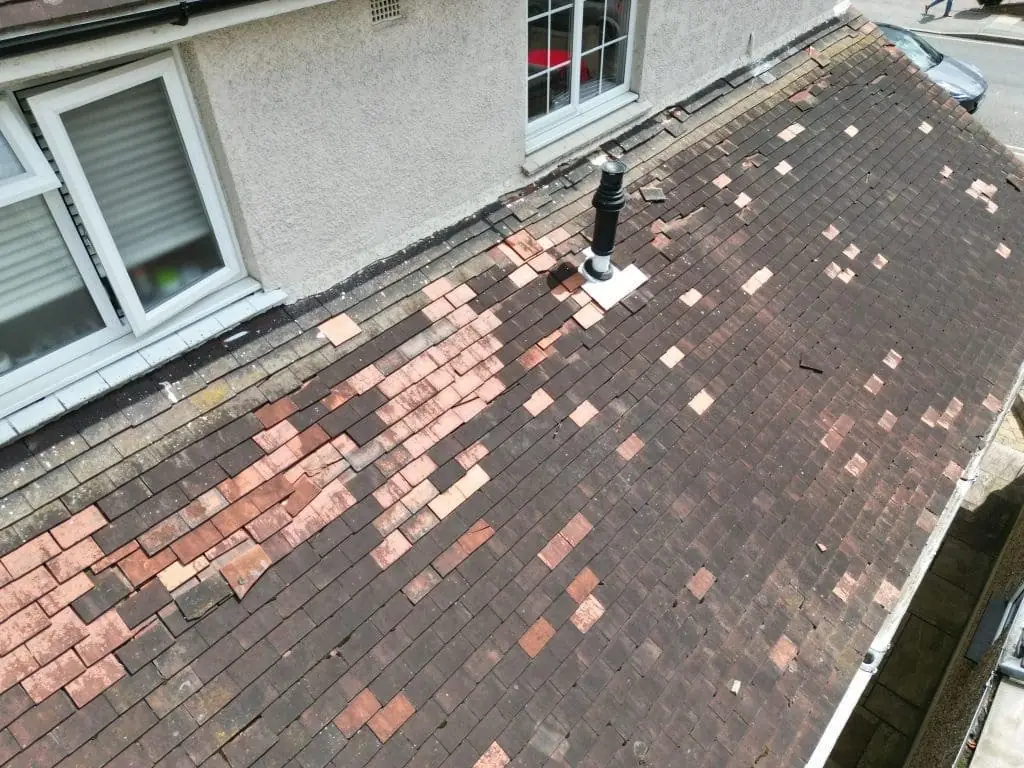
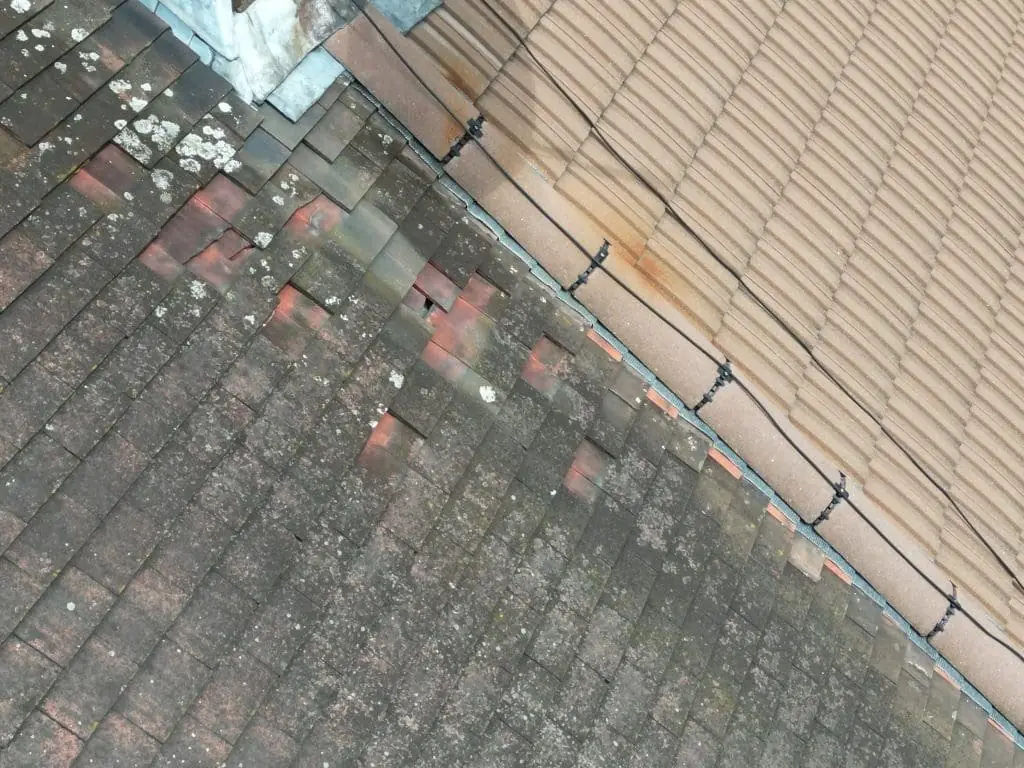
- Slipped, cracked or patched roof tiles and slates, and moss along the roof line.
- Windows that are misted between the panes, rotten frames or ones that do not open.
- Doors that stick, drop or let in draughts.
- The age of the boiler, often on a label on the casing, and whether there is a service record.
- An old fuse box with a wooden back or rewirable fuses.
What a survey can — and cannot — tell you
A building survey provides an informed assessment of the visible condition of a property. Inspections are non-intrusive and limited to areas that are accessible at the time of inspection.
For a renegotiation, the survey gives the buyer the condition of each major part of the home, rated and explained, so the conversation with the agent starts from evidence rather than opinion.
- The visible condition of the roof, windows and doors, and where they are near the end of their life.
- The visible age and condition of the boiler and electrics.
- Urgent defects and safety risks, rated so they stand out.
- Estimated repair costs, where the survey includes them.
However, there are limitations to what a survey can determine without intrusive investigation.
- Services such as the boiler and wiring are not tested.
- Remaining life is an informed estimate; an item can last longer or fail sooner.
- Hidden areas, such as under floors and behind linings, cannot be seen.
Where higher-risk indicators are identified, further specialist or intrusive investigation may be recommended.
Frequently asked questions
Can I renegotiate after a survey?
Yes. Until contracts are exchanged, a buyer can use the survey findings and builders' quotes to ask for a lower price, for the seller to do the work, or for a retention.
Is it fair to ask for money off for an old roof?
It is fair to ask for the years of life a buyer could reasonably expect and is not getting. In the surveyor's view, that is at least 10 years for a roof, worked out pro-rata rather than the cost of a whole new roof.
Should I ask for money off for a working boiler?
If it is over 10 years old with no service record, it is reasonable to ask for a pro-rata figure towards at least 5 years of life. Ask for the service record and a gas safety check first.
Should I ask for money for routine maintenance?
No. Routine maintenance comes with every house, and asking for it weakens the case for the items that matter.
Does it matter that the price has already been reduced?
Not for repairs. A reduction for market conditions reflects affordability, not the condition the survey has found.