
What is an independent roof survey?
An independent roof survey is a targeted inspection of the roof by a surveyor who has no interest in the repair work. Roofing contractors often inspect roofs for free, but they are also the ones quoting for the work. An independent surveyor reports on what is actually needed, so the owner can get the right repair done and compare quotes on a fair basis.
Ready to book your survey? Get a survey price for the home you are buying.
When do you need a roof survey?
- A leak or damp staining on a ceiling or chimney breast.
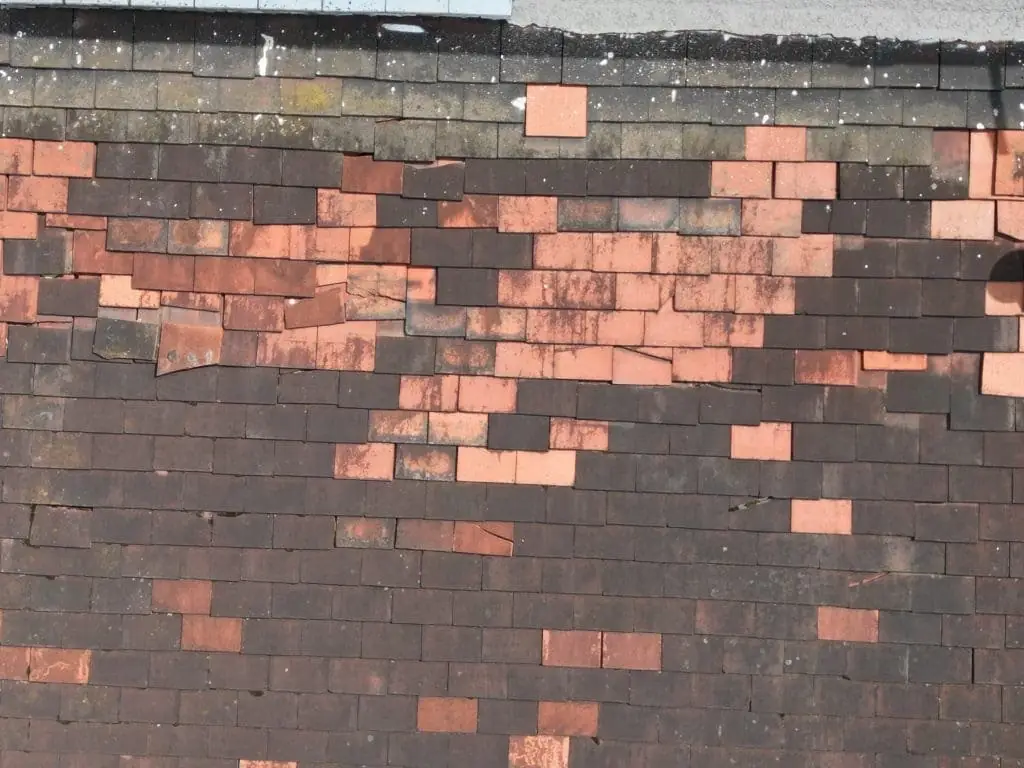
- Slipped, cracked or missing slates or tiles, or a sagging roof line.
- A roofer's quote for major repairs or a full replacement that needs checking.
- An ageing flat roof with ponding, splits or blisters.
- Chimney problems: leaning stacks, eroded pointing, failed flashings.
- Planning maintenance on an older roof before problems start.
- Before selling, to know the roof's condition in advance.
What does a roof survey check?
- Coverings: slates, tiles or flat roof membranes, their condition and approximate age.
- Ridges, hips and verges: loose or cracked tiles and failed mortar.
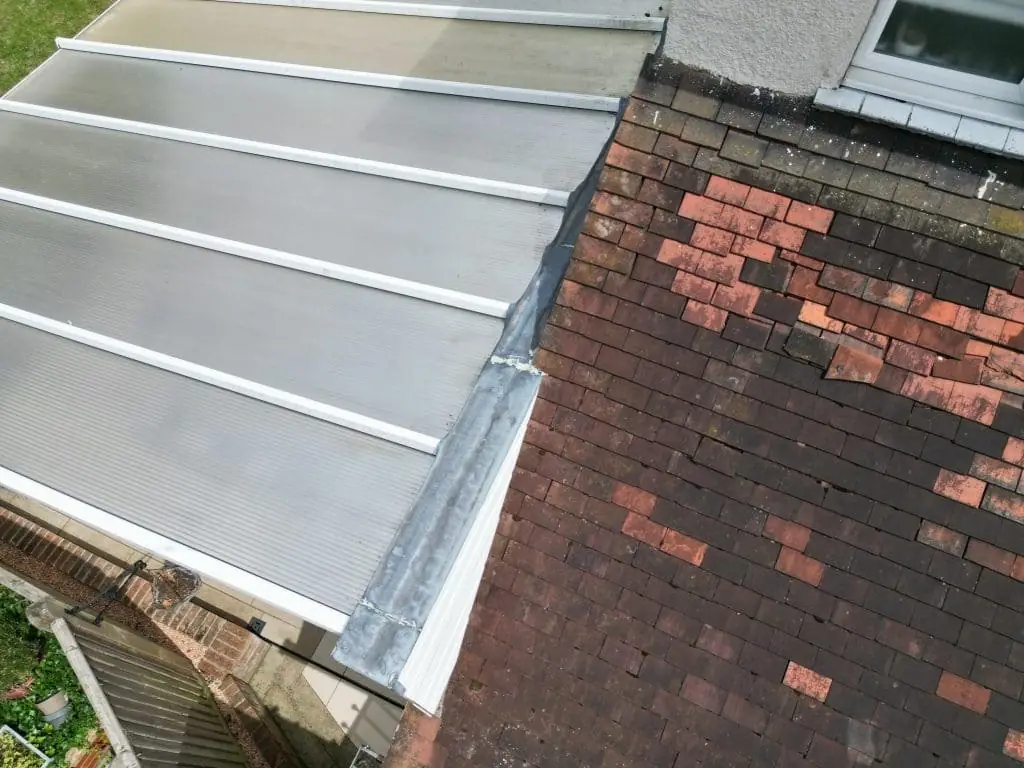
- Valleys and flashings: lead and other junctions, where leaks most often start.
- Chimneys: stacks, pots, pointing and flashings.
- Rainwater goods: gutters and downpipes, leaks and blockages.
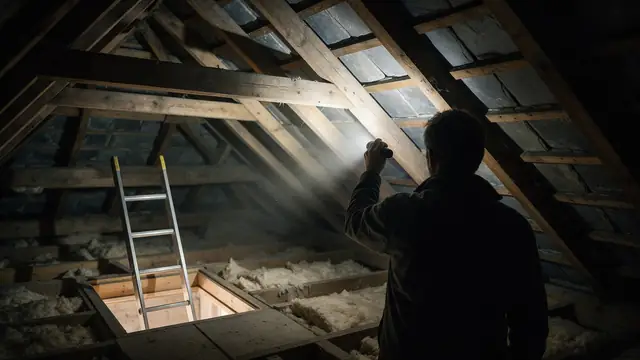
- Roof space: where accessible, rafters, purlins, signs of leaks, condensation, woodworm, insulation and ventilation.
What do drone images add?
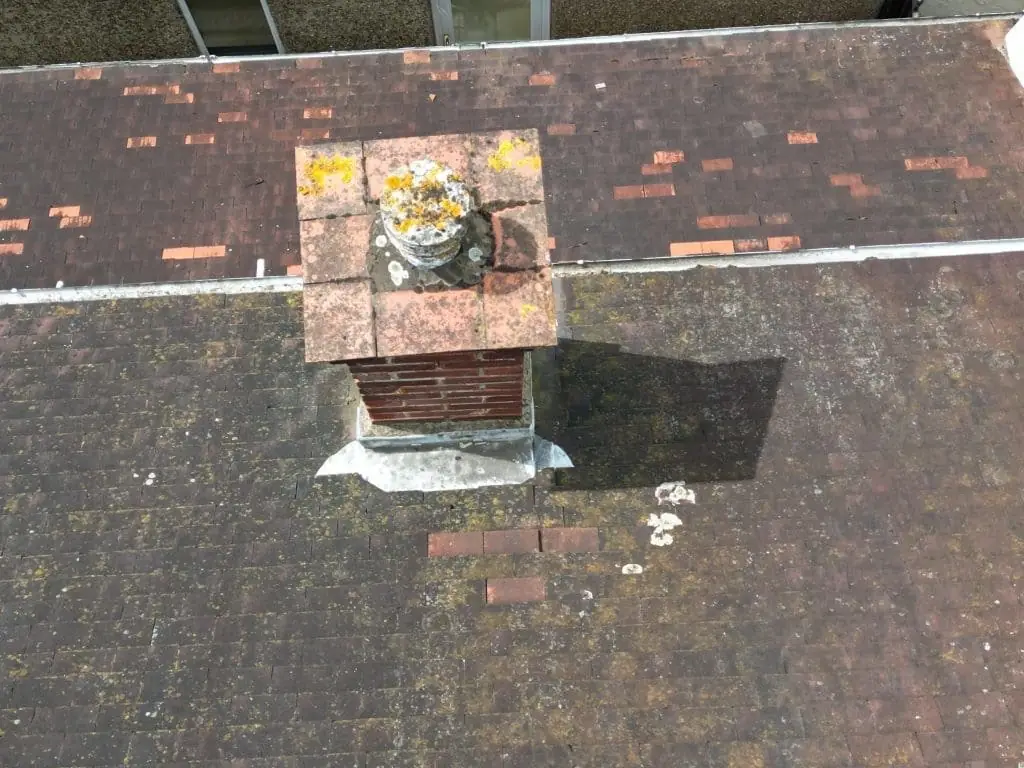
Many roof defects cannot be seen from the ground: valley gutters, the back slopes of terraces, chimney tops and flat roofs behind parapets. A drone, flown only where it is safe and permitted, photographs these areas close up without ladders or scaffolding, so the owner sees exactly what the surveyor saw.
| Area | From the ground | By drone |
|---|---|---|
| Front slope | Usually visible with binoculars | Close-up detail |
| Rear slopes and valleys | Often hidden | Visible |
| Chimney tops and flashings | Partly visible | Visible |
| Flat roofs behind parapets | Hidden | Visible |
What should you look out for?
- Brown staining on ceilings, especially below chimneys and valleys.
- Pieces of slate or tile in the garden or gutters.
- Daylight visible in the roof space.
- Moss and vegetation in valleys and gutters.
- Overflowing gutters in heavy rain.
What a survey can — and cannot — tell you
A building survey provides an informed assessment of the visible condition of a property. Inspections are non-intrusive and limited to areas that are accessible at the time of inspection.
A roof survey brings together what can be seen from the ground, from the roof space and, where used, from a drone, and links leaks and damp to their likely cause.
- The visible condition of the coverings, chimneys, flashings and gutters.
- Signs of leaks, condensation and timber decay in an accessible roof space.
- The likely cause of a leak and the repair options.
However, there are limitations to what a survey can determine without intrusive investigation.
- Slates and tiles are not lifted, and coverings are not opened up.
- Boarded, insulated or inaccessible roof spaces limit what can be seen.
- Drones are flown only where safe and permitted, and weather can prevent a flight.
Where higher-risk indicators are identified, further specialist or intrusive investigation may be recommended.
Frequently asked questions
Why not ask a roofer to inspect the roof?
A roofer can, but is usually also quoting for the work. An independent survey reports on what is needed without an interest in the repair.
Do I need a roof survey if I am buying a house?
A full survey covers the roof. A Level 3+ survey adds a drone roof inspection where it is safe to fly.
Does the surveyor go on the roof?
No. The roof is inspected from the ground, from the roof space where accessible and, where used, by drone.
Will a roof survey find the cause of a leak?
It looks for the likely cause from the visible evidence. Some leaks need further investigation, such as opening up or water testing, to confirm.