
What is an electrical installation?
An electrical installation is the wiring, components and devices set up in a building to distribute and use electricity. It includes wiring, sockets, switches, circuit breakers and protective devices.
A proper installation protects occupants, prevents electrical hazards and complies with regulatory standards. Installations need careful planning, adherence to safety standards and periodic inspection.
Why does a house need rewiring?
Wiring deteriorates over time through age, wear and tear and environmental conditions, and regulations and technology change. Rewiring replaces outdated or damaged wiring to keep the system safe and working.
Leaving outdated wiring in place can lead to electrical faults, fires and the risk of electrocution.
Want the services and materials checked? Get a survey price for the home you are buying.
What are the signs that a house needs rewiring?
- Frequent tripping of circuit breakers or fuses
- Flickering or dimming lights
- Burn marks or discolouration around sockets or switches
- Buzzing or crackling sounds from electrical outlets
- Outdated wiring materials
- Unearthed sockets (sockets without an earth connection)
- Overloaded circuits caused by increased electrical demand
If any of these signs are present, a qualified electrician should assess the wiring and recommend repairs or rewiring.
What are the dangers of faulty wiring?
- Electric shock. Faulty wiring can expose people to shocks ranging from mild discomfort to fatal injury, depending on the severity of the fault.
- Fire. Overloaded circuits, damaged wiring and short circuits can cause electrical fires, leading to property damage, injury and loss of life.
- Damaged appliances. Inadequate wiring can cause voltage fluctuations that damage sensitive electronic devices and appliances.
What does a modern electrical system include?
A modern system includes protective devices designed to improve safety, efficiency and reliability.
| Component | What it does |
|---|---|
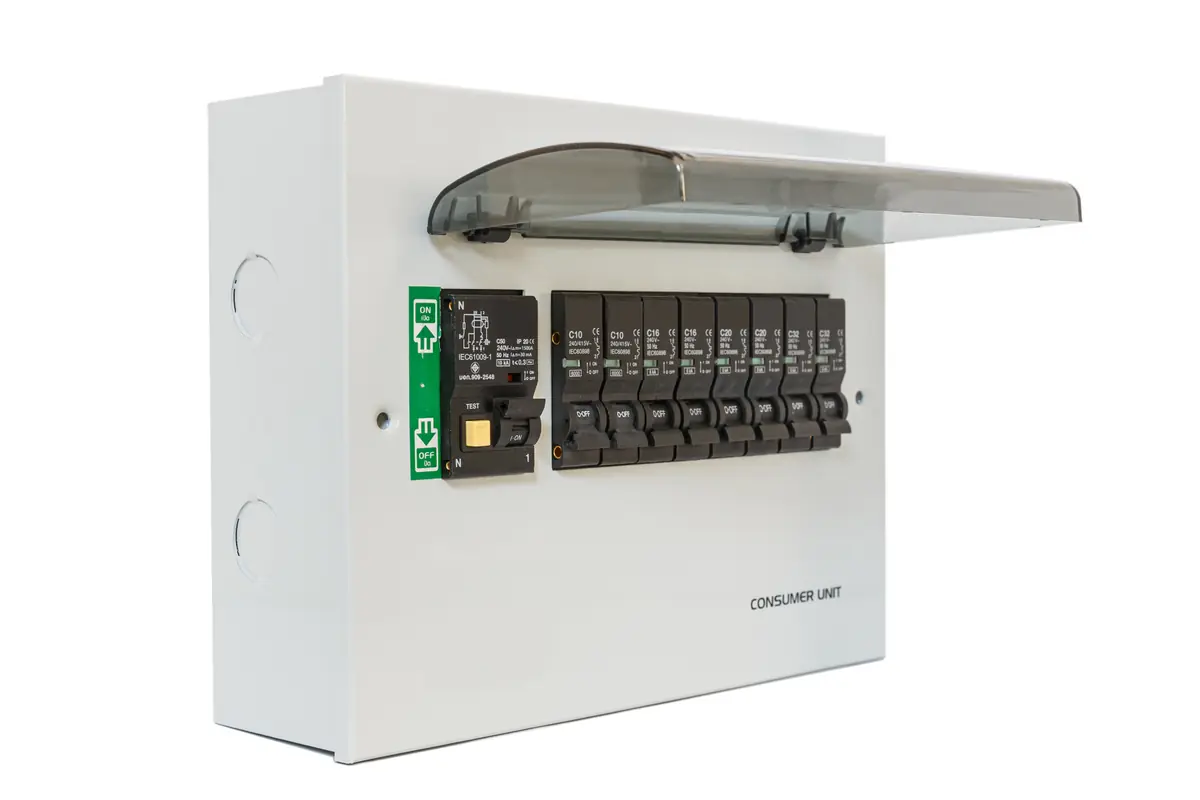
| RCD (residual current device) | Continuously monitors the current flowing in the live and neutral conductors. If it detects a mismatch, indicating leakage or a fault, it trips and cuts the supply, reducing the risk of electric shock or fire. |
| MCB (miniature circuit breaker) | Automatically disconnects a circuit on overload or short circuit. Unlike a fuse, which must be replaced after it blows, an MCB can be reset by hand. It helps prevent overheating of wiring and appliances. |
| Surge protection device | Diverts excess voltage from lightning strikes, grid fluctuations or switching operations away from sensitive equipment. |
| Consumer unit (distribution board) | Distributes electricity from the main supply to the circuits in the building and houses the MCBs, RCDs and other protective devices. |
| Earthing system | Provides a low-resistance path for fault currents to flow safely into the ground, reducing the risk of electric shock and fire. |
Wiring components
- Conductors carry the current and are typically copper or aluminium. Correct size and type give adequate current-carrying capacity and limit voltage drop.
- Sockets and switches should be good quality, to withstand frequent use and prevent overheating.
- Earthing electrodes and conductors need proper installation and maintenance for effective earthing.
What are the IET Wiring Regulations?
The IET (Institution of Engineering and Technology) Wiring Regulations, also known as BS 7671, set the standards and requirements for electrical installations in the UK. The latest edition includes amendments reflecting advances in technology, changes in safety standards and lessons from past incidents.
Key areas covered include:
- Electrical design and installation
- Selection and installation of wiring systems, components and equipment
- Protection against electric shock, fire and thermal effects
- Inspection, testing and certification of installations
- Special provisions for particular locations, such as bathrooms, kitchens and outdoor areas
Electricians and electrical contractors need to keep up with the latest regulations and train regularly to stay competent.
What to look for when viewing
- Burn marks or discolouration around sockets and switches
- Buzzing or crackling from outlets
- Flickering or dimming lights
- Outdated wiring materials
What to do next
- Ask the seller whether circuit breakers or fuses trip frequently.
- Ask for inspection, testing and certification records for the installation.
- Have a qualified electrician assess the wiring if any warning signs are present.
- Act on the electrician's recommendations for repairs or rewiring.
What a survey can — and cannot — tell you
A building survey provides an informed assessment of the visible condition of a property. Inspections are non-intrusive and limited to areas that are accessible at the time of inspection.
A survey can note visible warning signs of outdated or faulty wiring and recommend that a qualified electrician assesses the installation.
- Visible burn marks or discolouration around sockets and switches
- The type of consumer unit and whether RCDs and MCBs are visible
- Visible outdated wiring materials
However, there are limitations to what a survey can determine without intrusive investigation.
- The condition of wiring hidden in walls, floors and ceilings
- Whether the earthing system is effective
- Whether circuits are overloaded or correctly protected, which needs electrical testing
Where higher-risk indicators are identified, further specialist or intrusive investigation may be recommended.
Frequently asked questions
How can you tell if a house needs rewiring?
Warning signs include frequent tripping of breakers or fuses, flickering or dimming lights, burn marks around sockets or switches, buzzing or crackling outlets, outdated wiring materials and overloaded circuits.
What does an RCD do?
It monitors the current in the live and neutral conductors and trips, cutting the supply, when it detects a mismatch that indicates leakage or a fault.
What is the difference between a fuse and an MCB?
Both disconnect a circuit on overload or short circuit, but a fuse must be replaced after it blows, whereas an MCB can be reset by hand.
What is BS 7671?
It is the standard for electrical installations in the UK, also known as the IET Wiring Regulations.
Why does old wiring need replacing?
Wiring deteriorates with age, wear and environmental conditions, and outdated wiring can lead to electrical faults, fires and electrocution.