
Why are home EV chargers becoming a selling point?
Home EV chargers are becoming a selling point because more people are switching from petrol and diesel cars to electric vehicles, and buyers increasingly look for homes that can accommodate them. An EV charger is a charging point for an electric vehicle (EV) fitted at the property.
Demand for EVs is expected to keep rising. The shift covers not only the cars but the infrastructure that supports them, particularly home chargers.
Does an EV charger make a home more appealing to buyers?
It can, for buyers who own or plan to buy an electric vehicle.
- Market appeal: a charger already in place can make a home stand out in a competitive market.
- Relevance over time: as EV adoption grows, a charger is expected to become an increasingly important feature for buyers.
- Functionality: it adds to the overall utility of the home and can appeal to a broader range of buyers.
Want the services and materials checked? Get a survey price for the home you are buying.
How does a home charger affect charging costs?
A home charger lets the owner charge on off-peak electricity rates.
- Off-peak charging: smart chargers can be programmed to charge during off-peak hours.
- Solar panels: where a home already has solar panels, solar energy can be used to charge the vehicle.
- Energy monitoring: smart chargers can monitor energy consumption and integrate with home energy management systems.
What are the environmental benefits?
The main environmental benefit is lower carbon emissions from switching to an electric vehicle. A home charger supports that transition and can attract buyers who value sustainable living. The UK government promotes EV adoption, and a charger aligns a property with that aim.
How convenient is charging at home?
Charging at home is more convenient than relying on public charging stations. The vehicle can be plugged in overnight and be fully charged by the morning.
Public charging stations can be scarce, often busy, inconveniently located and may involve waiting in line. Home charging saves that time, which appeals to busy professionals and families.
What should be considered when installing a charger?
The main considerations are the right charger, professional installation and a sensible location.
- Choosing the charger: consider charging speed, compatibility with the vehicle and features such as smart charging. A professional installer can advise.
- Professional installation: DIY installation is not recommended. A qualified electrician should install the charger safely and correctly, in line with all relevant regulations and standards.
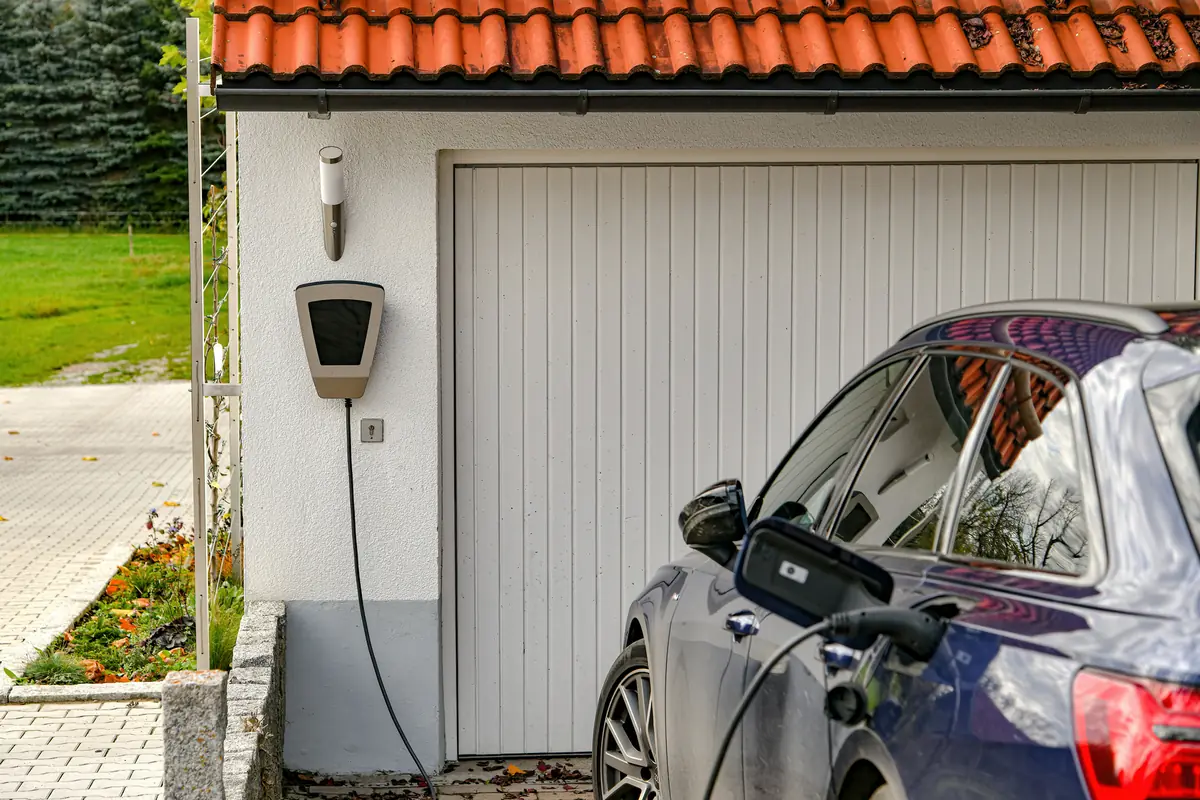
- Location: ideally a convenient, accessible spot such as a garage or driveway, where it does not interfere with other parts of the property. Its appearance and fit with the home's design also matter.
- Limited space: compact and wall-mounted chargers are available for smaller spaces.
- Maintenance: modern chargers are designed to be low-maintenance and durable; regular inspections and occasional servicing keep them in good working order.
- Cost: the initial outlay can be significant.
How is EV charger technology changing?
EV charger technology is becoming more efficient, more user-friendly and more closely integrated with smart home systems.
- Compatibility: modern chargers are designed to work with a wide range of electric vehicles, so they stay relevant as new models arrive.
- Smart home integration: many chargers integrate with home automation systems, giving greater control over energy use.
- Wireless charging: charging without physical cables, using electromagnetic fields to transfer energy. It is still at an early stage.
- Vehicle-to-Grid (V2G): lets an EV draw power from the grid and also supply power back to it, which can help balance the grid. This needs a V2G-compatible charger.
- Solar-powered charging: as renewable energy becomes more common, integrating chargers with it is expected to become more important.
What a survey can — and cannot — tell you
A building survey provides an informed assessment of the visible condition of a property. Inspections are non-intrusive and limited to areas that are accessible at the time of inspection.
For a buyer, a survey can note the presence of features such as an EV charger and related installations, alongside the condition of the property as a whole.
- Whether a charger is fitted, and where, such as a garage or driveway.
- Related features such as solar panels.
- The visible condition of the property around the installation.
However, there are limitations to what a survey can determine without intrusive investigation.
- A visual inspection cannot confirm that a charger was installed by a qualified electrician in line with the relevant regulations and standards.
- It cannot test the charger's performance, charging speed or smart features.
- It cannot confirm compatibility with a particular vehicle.
Where higher-risk indicators are identified, further specialist or intrusive investigation may be recommended.
Frequently asked questions
Can an EV charger be installed as a DIY job?
It is not recommended. A qualified electrician should install it safely and correctly, in line with all relevant regulations and standards.
Where is the best place for a home EV charger?
A convenient, accessible location such as a garage or driveway, where it does not interfere with other parts of the property. Compact and wall-mounted options suit smaller spaces.
Do home EV chargers need much maintenance?
Modern chargers are designed to be low-maintenance and durable. Regular inspections and occasional servicing keep them in good working condition.
What is Vehicle-to-Grid charging?
Vehicle-to-Grid (V2G) lets an electric vehicle supply power back to the grid as well as draw from it. It needs a V2G-compatible charger.