
What is a cold applied liquid roof covering?
It is a roofing system applied cold, as a liquid, that forms a seamless, monolithic (single, jointless) membrane over the roof. Because it goes on as a liquid, it conforms to the contours of the roof and covers it completely.
These coverings have become increasingly popular in the UK for their versatility, ease of application and long-lasting performance. They can be used on flat, pitched and complex roof structures, on both residential and commercial properties.
How long does a cold applied liquid roof last?
The life expectancy depends on the quality of the product and the expertise of the application. Three factors decide how long a roof lasts.
- Quality of materials: high-quality products, often made from advanced polymers and resins, offer better resistance to weathering, UV radiation and mechanical stress. Premium materials can significantly extend the life of the covering.
- Application: proper surface preparation, including cleaning and priming, gives good adhesion. The work should be carried out by skilled professionals following the manufacturer's guidelines to achieve a uniform, seamless finish.
- Maintenance: the coverings are relatively low-maintenance, but periodic inspections, cleaning and minor repairs stop small issues escalating, and prompt attention to wear and tear extends their life.
Buying a home with an older roof? Get a survey price for the home you are buying.
How do liquid roof coverings perform?
Their main strength is seamless waterproofing: there are no joints or seams for water to find. Other performance characteristics are set out below.
| Characteristic | What it means |
|---|---|
| Seamless waterproofing | A monolithic membrane with no joints or seams for water to enter through |
| Flexibility and elasticity | Accommodates structural movement and thermal expansion, useful where temperatures fluctuate significantly or loads are dynamic |
| UV resistance | Formulated to resist the degrading effect of sunlight over the long term |
| Chemical resistance | Resists a wide range of chemicals, including acids, alkalis and industrial pollutants, suiting properties in industrial areas or areas with high air pollution |
| Energy efficiency | Some products are reflective, reducing heat absorption |
What are the hazards and risks?
The risks lie mainly in the application: chemical exposure, fire, emissions, workmanship and weather.
- Health and safety: the chemicals used can pose risks if not handled properly. Safety guidelines should be followed, with gloves, goggles and respirators, and adequate ventilation to minimise exposure to fumes.
- Fire: cold applied systems are generally considered safer than hot-applied systems, but there is still a fire risk if flammable materials are used or the work generates sparks. Fire safety protocols should be followed, using non-flammable products wherever possible.
- Environmental impact: some formulations contain volatile organic compounds (VOCs, chemicals that evaporate and contribute to air pollution). Low-VOC or VOC-free products reduce the impact.
- Application challenges: a uniform, seamless finish needs skill and precision. Inadequate surface preparation, improper mixing or uneven application can compromise performance and longevity, so experienced installers with a proven track record reduce the risk.
- Weather during application: extreme temperatures, high humidity or rain can affect curing and adhesion. Application is best scheduled for favourable weather.
How is a cold applied liquid roof covering applied?
The covering is applied in six stages, and surface preparation is the most critical.
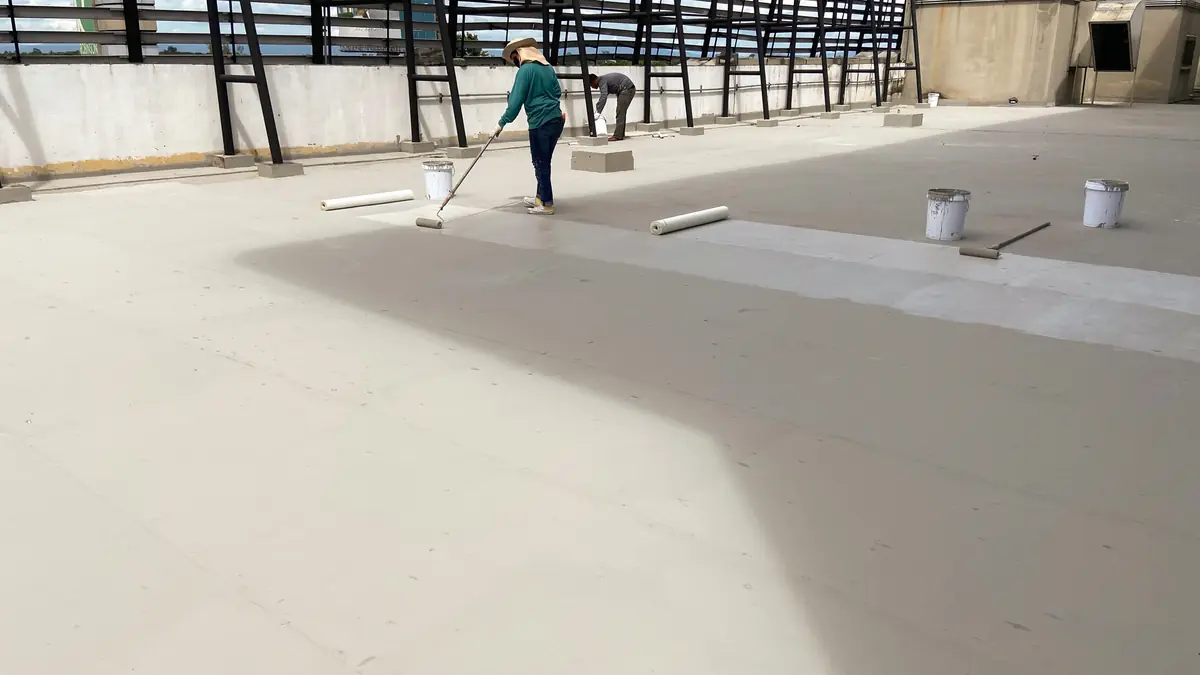
- Surface preparation: the roof is cleaned of dirt, debris and any existing coatings with a pressure washer or stiff brush, and damaged areas such as cracks or blisters are repaired to create a uniform surface.
- Priming: a suitable primer is applied by roller or brush, following the manufacturer's instructions, and left to dry completely. Priming improves the bond between substrate and coating.
- Mixing: the coating is mixed thoroughly to the manufacturer's ratios and techniques, with a mechanical mixer if needed, for a uniform blend.
- Application: the coating is applied by roller, brush or spray, depending on the size and complexity of the roof, working systematically from one end. Seams, joints and penetrations need special attention. Multiple coats may be applied, each allowed to dry before the next.
- Curing: the coating cures according to the manufacturer's recommendations; times vary by product and weather. Foot traffic and other disturbance should be avoided during curing.
- Inspection and maintenance: once cured, the roof is inspected for a seamless, uniform finish and any imperfections are touched up. Periodic inspection and cleaning then extend its life.
How should the right product be chosen?
The choice depends on the roof, the local climate, the manufacturer and the budget.
- Roof type and condition: the systems suit flat, pitched and complex roofs, but the condition of the substrate (the surface being coated) should be evaluated for proper adhesion.
- Climate: some products are formulated to withstand extreme temperatures, heavy rainfall or high UV exposure, so the coating should suit the local climate.
- Manufacturer reputation: established brands with a history of reliable products are preferable; customer reviews and recommendations from industry professionals help.
- Warranty and support: the warranty and the technical support offered during application should be checked.
- Cost: premium products may cost more upfront but often offer better performance and longevity.
What to look for when viewing a property with a liquid-coated roof
- Whether the finish looks uniform and seamless, without uneven or thin areas.
- Coverage around seams, joints and penetrations.
- Signs of wear and tear, cracking or splitting.
- Dirt and debris on the roof surface, suggesting a lack of maintenance.
- Any warranty and details of who applied the coating.
What a survey can — and cannot — tell you
A building survey provides an informed assessment of the visible condition of a property. Inspections are non-intrusive and limited to areas that are accessible at the time of inspection.
For a liquid-coated roof, a survey can identify visible signs of wear or poor application, so that small issues can be dealt with before they escalate into major problems.
- The visible condition and uniformity of the coating.
- Coverage at seams, joints and penetrations.
- Visible cracking, splitting or wear.
- Debris and the general state of maintenance.
However, there are limitations to what a survey can determine without intrusive investigation.
- The quality of the product used and how it was mixed.
- Whether the surface was properly prepared and primed before coating.
- The condition of the substrate beneath the membrane.
- Whether the coating cured in suitable weather conditions.
Where higher-risk indicators are identified, further specialist or intrusive investigation may be recommended.
Frequently asked questions
How long does a liquid roof coating last?
It depends on the quality of the product and the expertise of the application; poor surface preparation, mixing or application shortens its life.
Can liquid roof coatings be used on pitched roofs?
Yes. The systems can be applied to flat, pitched and complex roof structures, provided the substrate is in a condition that allows proper adhesion.
Are cold applied roof coatings a fire risk?
They are generally considered safer than hot-applied systems, but there is still a fire risk if flammable materials are used or the work generates sparks.
Can a liquid roof coating be applied in wet weather?
Rain, high humidity and extreme temperatures can affect curing and adhesion, so application is best scheduled for favourable weather.
Do liquid roof coatings need maintenance?
They are relatively low-maintenance, but periodic inspection, cleaning and prompt minor repairs stop small issues becoming major problems.