
Are bats protected in UK properties?
Yes. All bat species native to the UK are protected by legislation. Harming bats or their roosts can lead to penalties that can include imprisonment.
Bats are more common in UK properties than most people realise. Buyers looking at older or rural properties may see a bat flitting around the eaves or tucked into the rafters, while other owners live in a property for years without knowing bats are there.
Questions about the home you are buying? Get a survey price for the home you are buying.
Why do bats matter when buying a house?
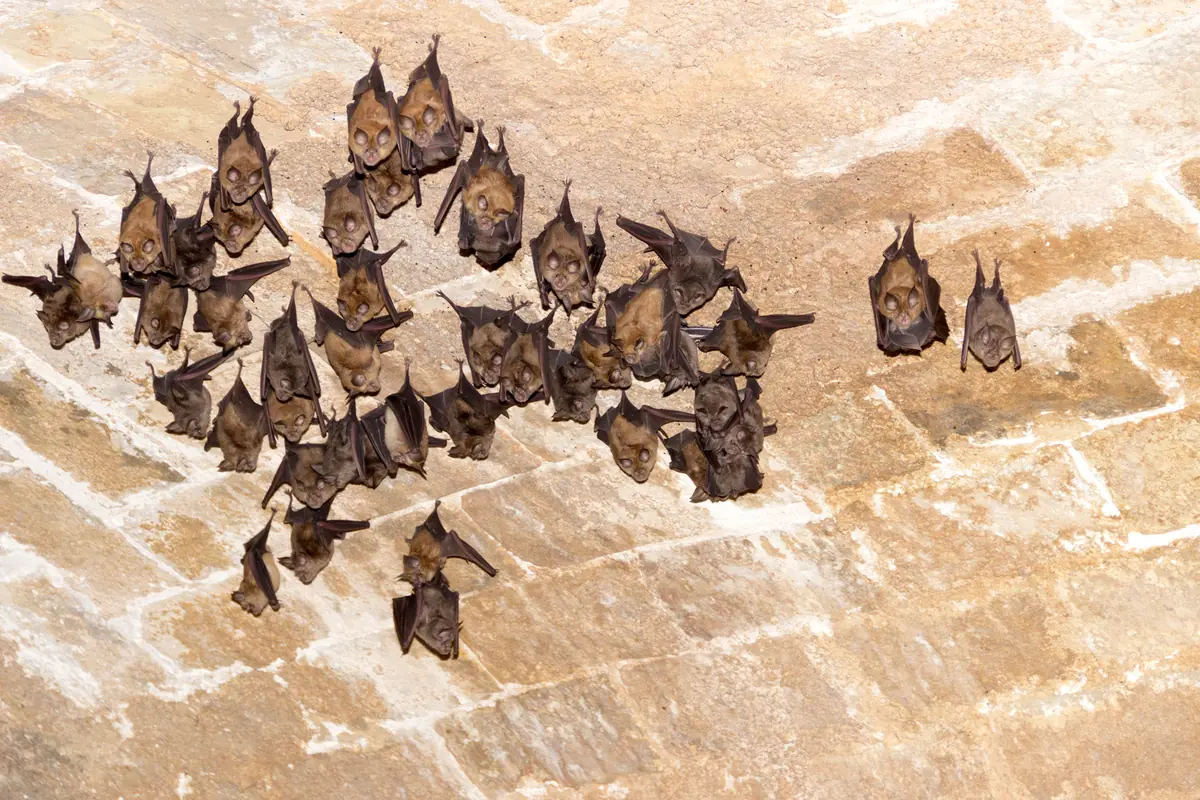
Bats matter because their protection under the law can restrict construction and renovation work. The practical implications of finding bats can include:
- restrictions on construction and renovation work;
- additional surveys;
- sometimes a need to rehouse the bats;
- the associated costs and time.
Bats are also an important part of the ecosystem. Every UK bat is insectivorous, so they help control insect populations.
What are the signs of bats in a loft?
The main sign is small piles of droppings or stains around the entry and exit points of a roost.
- Droppings: small piles in the loft or similar spaces, near entry and exit points.
- Stains: around the entry and exit points of roosts.
- Urine spots: less common, found in attics or on walls near entry points.
- Scratches: small scratches or marks on timber beams.
- Sightings: a bat around the eaves or in the rafters.
What should you do if you find bats?
Do not panic, and call in professionals. Bats are generally harmless and prefer to keep their distance from people.
- Contact professionals trained to deal with bat-related issues in properties, such as bat conservation trusts or professional surveyors, for guidance on how to proceed.
- Never attempt removal or rehousing of a bat colony yourself, as both fall under the protection of the law.
- Have a bat survey carried out to assess how the bats might affect any planned work on the house.
- Follow the guidance on next steps, which may mean delaying work until the bats have moved on naturally, or creating alternative roosting sites under the guidance of an ecologist.
What to look for when viewing
- Small piles of rice-sized droppings in the loft that crumble to dust.
- Stains around possible entry and exit points.
- Urine spots in the attic or on walls near entry points.
- Small scratches or marks on timber beams.
- Bats around the eaves or in the rafters, particularly in older or rural properties.
What a survey can — and cannot — tell you
A building survey provides an informed assessment of the visible condition of a property. Inspections are non-intrusive and limited to areas that are accessible at the time of inspection.
A survey can reveal significant issues before purchase, including signs of bats, so a buyer understands any restrictions on planned work before committing.
- Droppings, stains and urine spots in an accessible loft or roof space.
- Scratches or marks on accessible timber beams.
- The condition of the roof structure and building generally.
However, there are limitations to what a survey can determine without intrusive investigation.
- Bats typically stay out of sight, and a property can be occupied by them for years without being noticed.
- A building survey is not a bat survey; how bats might affect planned work needs assessment by bat professionals.
- Roof spaces that are inaccessible at the time of inspection cannot be checked for signs.
Where higher-risk indicators are identified, further specialist or intrusive investigation may be recommended.
Frequently asked questions
Are all UK bats protected?
Yes. All bat species native to the UK, and their roosts, are protected by legislation.
What do bat droppings look like?
They are about the size of a grain of rice and crumble into a fine dust when touched, unlike similar-sized bird droppings.
Can bats be removed from a loft?
Not by the owner. Removal and rehousing of bat colonies fall under the protection of the law and should never be attempted without professional help.
What is the penalty for harming bats?
Harming bats or their roosts can lead to penalties that can include imprisonment.
Can bats stop renovation work?
Finding bats can bring restrictions on construction and renovation work, additional surveys and sometimes rehousing, with associated costs and time.