
Overview
The Lowton-Cubitt house is a mid-20th century system-built property developed in response to post-war housing shortages. Manufactured between 1964 and the 1970s, approximately 3,700 units were constructed across urban and suburban locations in the UK. The system was developed by Cubitts Construction Systems Ltd and Lowton-Cubitt Housing Ltd, with design input from the Lowton Construction Group.
These properties are also known under alternative names including Cubitt, LC, LC System, and Modulow.
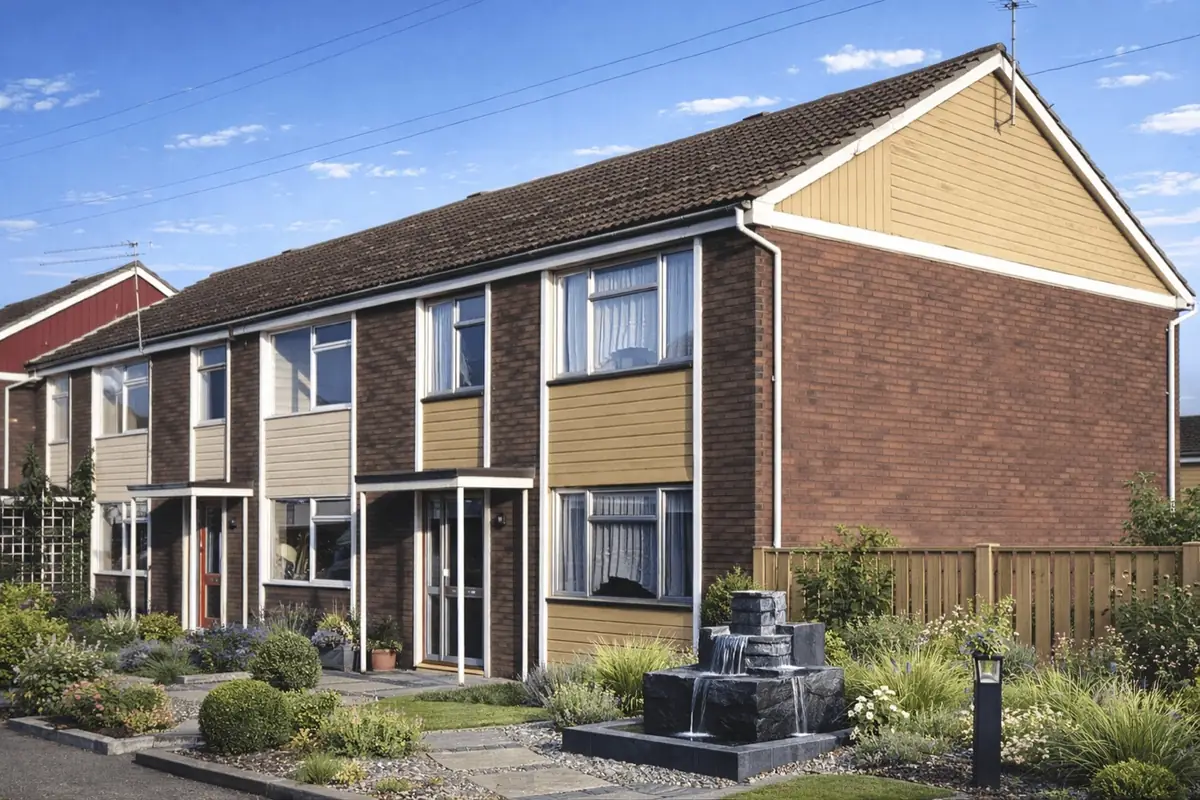
Typical characteristics & construction
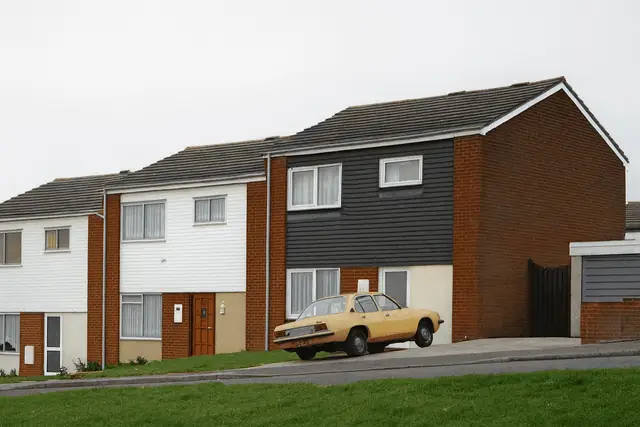
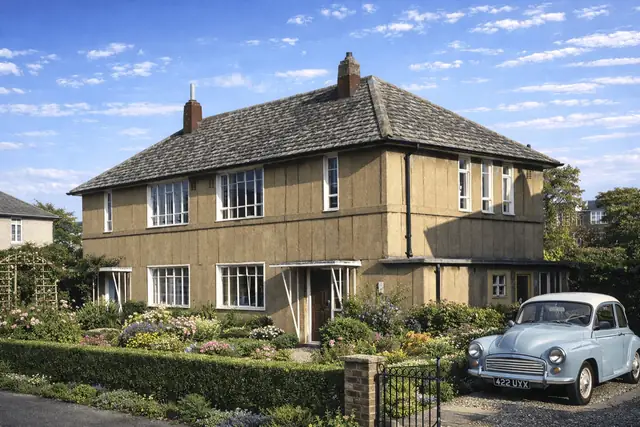
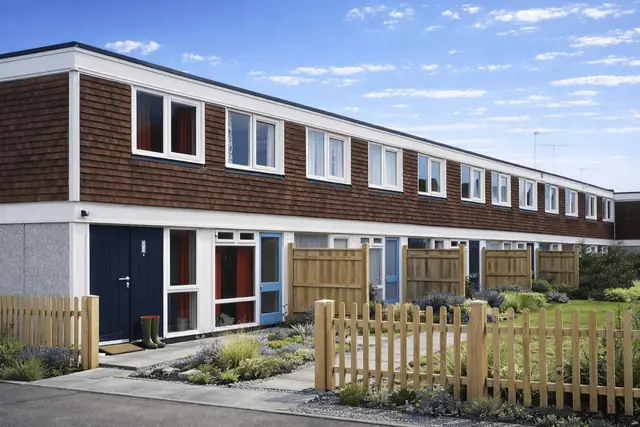
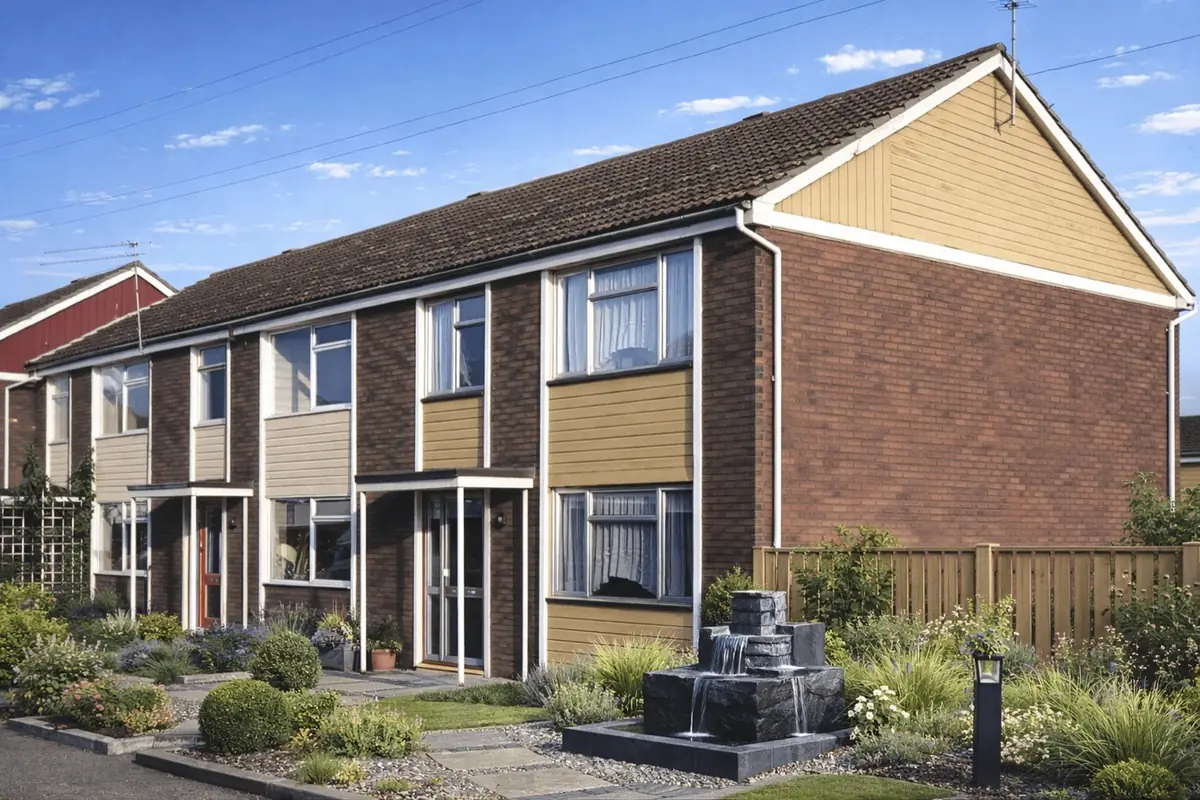
Lowton-Cubitt houses are most commonly two-storey terraced properties, although some variants incorporate integral garages and utility rooms at ground level, giving the appearance of a three-storey arrangement.
Roofs are medium-pitch gable roofs covered with interlocking concrete tiles. External wall finishes vary and may include tile hanging, PVC shiplap boarding, or render, with brick panels typically located at the separating wall. Gable walls are commonly brick throughout or include mathematical tiles up to eaves level with vertical timber boarding to the apex.
| Element | Typical construction | Inspection focus |
|---|---|---|
| Substructure | Concrete trench foundation with DPC | Movement, cracking, DPC position |
| Frame | Welded rolled steel channel and hollow box sections | Corrosion, protective coatings, fixings |
| External walls | Brick panels, gas concrete panels, timber infill with cladding | Cracking, moisture ingress, junction detailing |
| Floors | Concrete slab ground floor, chipboard on timber joists first floor | Movement, deflection, moisture |
| Roof | Timber trusses with felt and concrete tiles | Tile condition, felt, structural alignment |
Potential hazards & inspection priorities
The most significant inspection concerns relate to the condition of the steel frame, particularly where elements are located below damp-proof course level. Minor to moderate corrosion is a known issue and was a recurring concern with this form of construction.
Cracking to gas concrete panels, especially at separating walls, is also common and can permit moisture ingress if not appropriately sealed. Rain penetration can occur at infill panel and brick junctions where original sealants have deteriorated.
Is this house right for you?
Purchasers should be comfortable with system-built construction and the need for targeted inspection of steel framing, fixings, and wall panel interfaces.
- Commission a full building survey
- Pay close attention to frame condition and corrosion risk
- Budget for ongoing external maintenance
Mortgage & resale considerations
Lender acceptance can vary for Lowton-Cubitt houses and is influenced by condition, corrosion history, and the clarity of professional reporting. Clear evidence of maintenance and absence of unresolved structural concerns are commonly important factors.
What a survey can — and cannot — tell you
A building survey provides an informed assessment of the visible condition and construction of a Lowton-Cubitt house. Inspections are non-intrusive and limited to areas that are accessible at the time of inspection.
- Identify visible corrosion to accessible steel frame elements
- Assess cracking to gas concrete panels and external wall finishes
- Comment on roof coverings, drainage, and external envelope condition
- Review accessible floors, ceilings, and structural components
- Highlight defects requiring repair, monitoring, or further investigation
However, there are limitations to what a survey can determine without intrusive investigation.
- Confirm the condition of concealed steel frame sections
- Inspect hidden fixings and holding down bolts
- Assess concealed wall cavities and junctions
- Inspect areas not accessible at the time of inspection
Where higher-risk indicators are identified, further specialist or intrusive investigation may be recommended.