
Can you remove any tree on your own property?
No. A common misconception is that property owners have unrestricted rights to remove any tree on their land. Various regulations and protections may apply, including Tree Preservation Orders, conservation area restrictions and wildlife protection laws.
Whether the aim is to clear space for a new project, remove a potentially hazardous tree or improve the look of a garden, the legal and environmental implications need checking first. The main points are when permission is and is not needed, local bylaws, wildlife protection and the effect on neighbouring properties.
Seen cracks at a home you are buying? Get a survey price for the home you are buying.
What is a Tree Preservation Order?
A Tree Preservation Order (TPO) is a legal mechanism used by local authorities in the UK to protect specific trees, groups of trees or woodlands. Its primary purpose is to preserve trees that provide significant amenity value to the public, because of their beauty, historical significance or contribution to the local environment.
How to check if a tree has a TPO
Contact the local council or check its website, where councils often provide maps or lists of protected trees. If a TPO is in place, permission must be obtained from the local authority before carrying out any work on the tree, including pruning or felling.
What happens if a TPO is ignored?
Ignoring a TPO can result in significant penalties, including fines. In some cases the owner may also be required to replace the tree.
Do you need permission to cut down a tree in a conservation area?
The council must be notified before work on any tree in a conservation area with a trunk diameter of more than 75mm, measured at 1.5 metres above ground level. Conservation areas are designated by local authorities to protect the character and appearance of areas with historical or architectural significance, and often have additional planning controls.
There are some exceptions, such as where the tree is dead, dying or dangerous. Even then, it is advisable to inform the council and obtain written confirmation before proceeding.
Do local bylaws affect tree removal?
They can. Some local authorities may have specific bylaws or regulations on tree removal in addition to TPOs and conservation area restrictions, and these vary significantly between councils.
Local bylaws are usually available on the council's website or from its planning or environmental departments. Reviewing them before deciding on tree removal helps avoid fines or legal issues.
When should you not cut down a tree because of wildlife?
Felling trees or carrying out significant pruning should be avoided between March and August, when birds typically nest. The Wildlife and Countryside Act 1981 makes it illegal to intentionally harm or disturb certain species of wildlife, including birds, their nests and eggs.
Disturbing nesting birds can result in hefty fines and legal action. If a tree has to be removed during the nesting season, a thorough inspection for active nests is advisable first.
Other species, such as bats, badgers and certain insects, are also protected under UK law. If a protected species may be using the tree, seek advice from a qualified ecologist or contact the local council for guidance.
How does removing a tree affect neighbouring properties?
Removing a tree close to a boundary can affect neighbouring buildings. Tree roots can extend well beyond the tree's canopy, and removing a tree can sometimes cause subsidence or other structural issues for nearby buildings.
- Tell the neighbours. It is courteous and often necessary to inform neighbours if the tree might affect their property. Open communication can help prevent disputes.
- Shared trees. If a tree straddles a boundary, both owners may share responsibility for its maintenance. Reach an agreement before any work; if that is not possible, legal advice or mediation may be needed.
When is a felling licence required?
A felling licence may be needed to cut down a large number of trees; in England it comes from the Forestry Commission. This is more relevant to woodland and commercial felling than to individual garden trees, but it matters where a property has a significant number of trees.
An application involves detailed information about the trees to be removed, including their species, size and location. The licensing body assesses it and may impose conditions or require replanting to support sustainable forestry. Failing to obtain a felling licence when one is required can result in substantial fines and legal action.
What to do next: practical steps for tree removal
- Assess the tree. Consider its health, structural stability and potential hazards, and whether removal is necessary. If unsure, consult a qualified arborist.
- Check permissions. Confirm TPOs, conservation area restrictions and local bylaws, and have all permits and permissions in place before work begins.
- Hire a professional. Tree removal can be dangerous and complex, particularly for large or mature trees. Look for membership of the Arboricultural Association or the International Society of Arboriculture.
- Obtain several quotes. Prices vary with the tree's size, location and condition. Alternatives such as pruning may be worth considering.
- Plan for safety. Cordon off the work area from children and pets, and make sure everyone involved wears appropriate safety gear. Trees near power lines or other hazards need additional precautions.
- Arrange waste disposal. Many tree surgeons include waste removal, but confirm this beforehand. Otherwise, the council may collect green waste, or a skip can be hired for larger quantities.
- Consider replanting. Removing a tree can affect local biodiversity, particularly where it provides habitat. Replanting a tree or other vegetation helps maintain the ecological balance of the garden.
Sustainable practice also includes recycling tree waste, using eco-friendly equipment and avoiding unnecessary removal of healthy trees.
Is DIY tree removal safe?
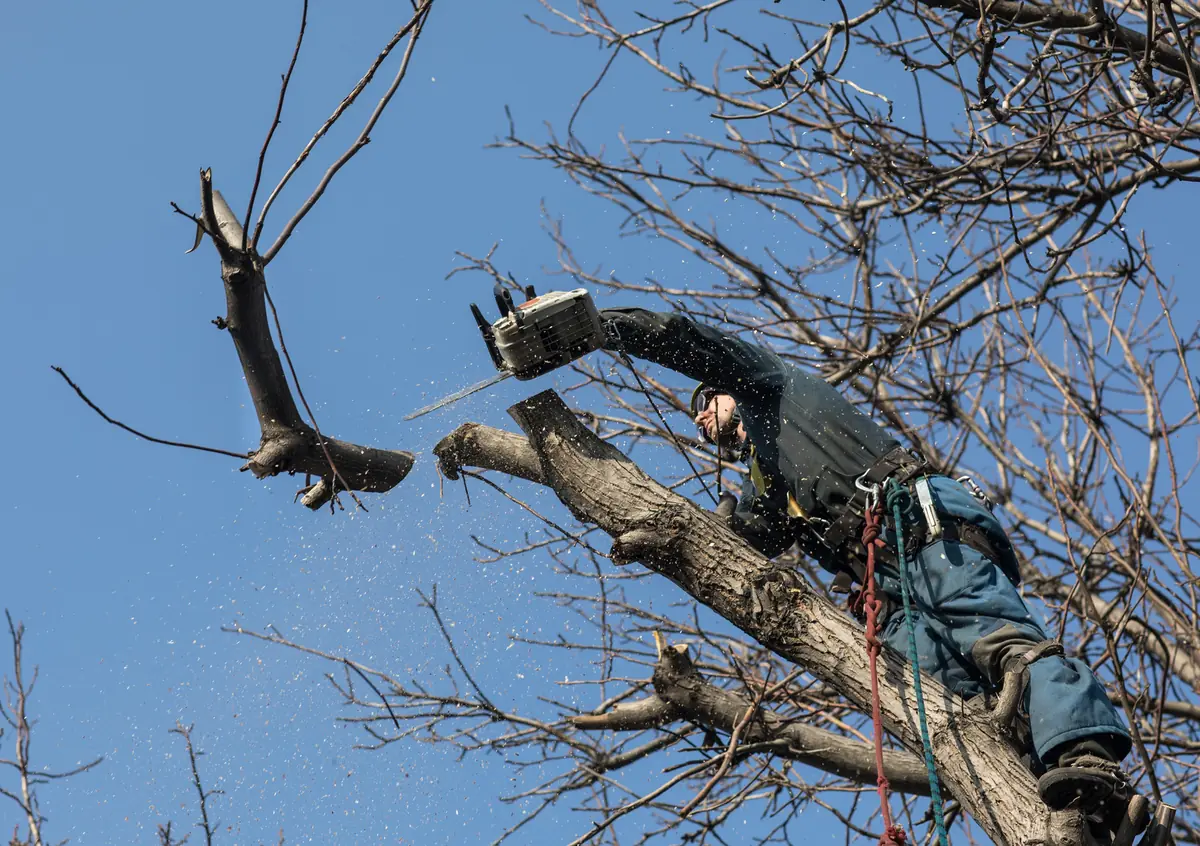
Tree removal is a complex and potentially dangerous task that requires specialised knowledge and equipment. Attempting it without that can result in injury, property damage or legal issues, which is why a qualified professional is recommended.
What a survey can — and cannot — tell you
A building survey provides an informed assessment of the visible condition of a property. Inspections are non-intrusive and limited to areas that are accessible at the time of inspection.
When buying a property with trees in or near the garden, a survey helps identify where trees stand close to buildings or boundaries, since tree roots can extend well beyond the canopy and removing a tree can sometimes cause subsidence or other structural issues for nearby buildings.
The surveyor can look at and record:
- Trees standing close to the property and its boundaries
- Trees that straddle a boundary and may be a shared responsibility
- Visible structural issues in nearby buildings
However, there are limitations to what a survey can determine without intrusive investigation.
- A survey cannot confirm whether a tree is protected by a TPO or lies in a conservation area; that is checked with the local council.
- The spread of roots below ground cannot be seen.
- A tree's health and structural stability need a qualified arborist's assessment.
- Whether protected species use a tree needs a qualified ecologist.
Where higher-risk indicators are identified, further specialist or intrusive investigation may be recommended.
Frequently asked questions
Do you need permission to prune a tree with a TPO?
Yes. If a TPO is in place, permission from the local authority is needed before any work on the tree, including pruning or felling.
What happens if you cut down a protected tree?
Ignoring a TPO can result in significant penalties, including fines, and in some cases the owner may also be required to replace the tree.
How much notice must be given for tree work in a conservation area?
The notification period is typically six weeks, for trees with a trunk diameter of more than 75mm measured at 1.5 metres above ground. During that time the council can decide whether to place a TPO on the tree.
Can a dead or dangerous tree be removed without notice?
Dead, dying or dangerous trees are among the exceptions to the conservation area rule. Even so, it is advisable to inform the council and obtain written confirmation before proceeding.
When is the bird nesting season?
Birds typically nest between March and August. Felling trees or significant pruning should be avoided in this period, as disturbing nesting birds can result in hefty fines and legal action.
Can removing a tree cause subsidence?
It can. Tree roots can extend well beyond the canopy, and removing a tree can sometimes cause subsidence or other structural issues for nearby buildings.