
What is a mineral felt roof?
Mineral felt is a roofing material made from bitumen, a sticky, black, highly viscous petroleum product, reinforced with a base material and coated with mineral granules. The granules give extra protection against UV rays and weathering, which extends the life of the roof.
Mineral felt roofs have been widely used in the UK for decades. They are commonly found on flat or low-pitched structures such as garages, extensions and garden sheds, mainly because they are affordable.
What types of mineral felt are there?
Mineral felt is classed by the base material that reinforces the bitumen, and this affects how long it lasts.
| Type | Base material | Characteristics |
|---|---|---|
| Traditional felt | Organic materials such as paper or wood fibre | Less durable and more susceptible to weather damage |
| Fibreglass felt | Fibreglass | Better durability and resistance to tearing |
| Polyester felt | Polyester | High tensile strength; the most durable and long-lasting option |
The felt can also be laid using different systems:
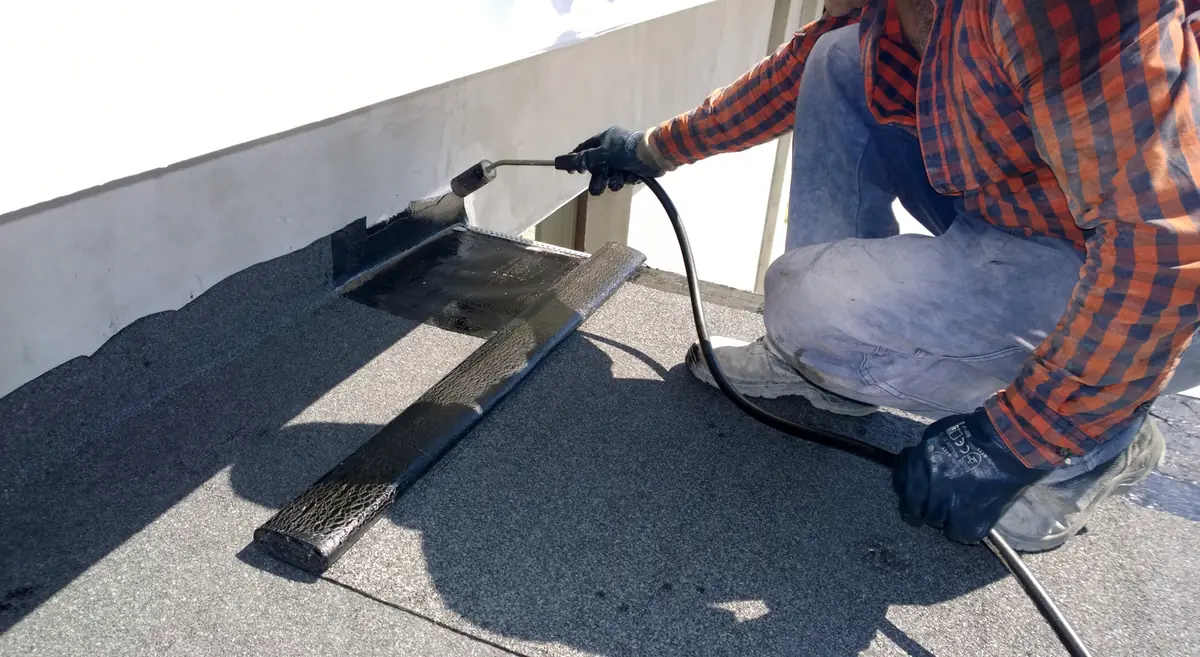
- Torch-on felt: a torch is used to bond the layers. It is robust and has a good lifespan.
- Self-adhesive felt: the felt has a sticky underside, removing the need for a torch.
- Pour and roll felt: hot bitumen is used to bond the felt layers.
Buying a home with an older roof? Get a survey price for the home you are buying.
How long does a mineral felt roof last?
The lifespan depends mainly on the type of felt. More durable fibreglass or polyester felts can last up to 20 years, while traditional felt roofs may only last 10 to 15 years. Climate, installation quality and how often the roof is maintained also affect it.
This means mineral felt may need replacing more often than materials such as tile or metal.
What are the advantages of mineral felt?
The main advantage is cost: mineral felt is relatively inexpensive compared with slate, tile or metal.
- Affordability: attractive on a budget and for secondary structures such as sheds and garages.
- Light weight: the material is lightweight and can be cut to size.
- Flexibility: it conforms to various roof shapes and sizes.
- Weather resistance: when properly installed, the bitumen layer forms a waterproof barrier and the granules protect against UV rays and weathering. It gives a good defence against rain, sun and snow.
- Low maintenance: regular inspections and occasional repairs prolong its life, but overall maintenance needs are relatively low.
What are the disadvantages of mineral felt?
The main drawback is a limited lifespan compared with other roof coverings.
- Susceptibility to damage: physical impacts such as falling branches or hail can damage it, and it can tear or puncture, particularly if not properly installed or maintained.
- Appearance: it has a utilitarian look that may not suit the design of some homes; slate or tile may be more suitable where kerb appeal matters.
- Environmental concerns: bitumen is petroleum-based, its production and disposal can contribute to pollution and greenhouse gas emissions, and mineral felt is not easily recyclable.
What defects affect mineral felt roofs?
The most common defects are blistering, cracking and sagging.
- Blistering: small bubbles or blisters form over time, often because of trapped moisture.
- Cracking: extended exposure to UV rays can make the felt brittle until it cracks.
- Sagging: poor installation or water accumulation can cause sections of the roof to sag.
What are the hazards and risks of mineral felt roofs?
The most significant hazard is fire, because bitumen is flammable.
Water ingress
Over time the bitumen layer can degrade, leading to cracks or gaps that let water through. This can result in leaks, mould growth and structural damage to the building.
UV degradation
The mineral granules can wear away, leaving the bitumen exposed to the sun. The bitumen then degrades and becomes brittle, making the roof more prone to cracking.
Poor installation
Improper installation is common, particularly on DIY projects. If the felt is not correctly aligned, overlapped or sealed, the result can be water ingress, wind uplift and a reduced lifespan.
Health risks to workers
Bitumen fumes can be harmful if inhaled, and prolonged exposure can lead to respiratory issues. Hot bitumen used during installation can cause burns if proper safety precautions are not taken.
How is a mineral felt roof installed?
Installation follows four main steps:
- Preparation: old roofing material is removed and the roof deck, the surface the covering sits on, is made clean and smooth.
- Underlay: a base layer is rolled out and secured.
- Felt application: the mineral felt is rolled out without trapping air bubbles, and the edges are sealed to make it watertight.
- Final touches: overlaps are sealed with bitumen and the surface is finished with a mineral granule layer.
Manufacturer's guidelines should be followed, and a qualified roofing contractor installing to industry standards helps prevent water ingress, wind uplift and a reduced lifespan.
How should a mineral felt roof be maintained?
A mineral felt roof should be inspected at least twice a year, and especially after harsh weather.
- Look for cracks, tears, blisters or missing granules, and repair defects promptly before they worsen.
- Keep the surface clear of leaves, branches and other debris that can trap moisture.
- Consider a reflective coating to reduce UV degradation, choosing one compatible with the felt and following the manufacturer's application guidelines.
- Reduce fire risk by keeping flammable materials away from the roof.
- Anyone installing or maintaining the roof should wear protective clothing, gloves and masks, and be trained in handling bitumen safely.
What are the alternatives to mineral felt?
EPDM rubber, GRP fibreglass, TPO, metal and green roofs are the main alternatives.
| Material | Description | Stated lifespan |
|---|---|---|
| EPDM rubber | Ethylene propylene diene monomer, a synthetic rubber that is durable, flexible and resistant to UV and weathering | Up to 50 years with proper maintenance |
| GRP fibreglass | Glass-reinforced plastic made from fibreglass and resin, resistant to UV, weathering and physical damage | Up to 30 years with minimal maintenance |
| TPO | Thermoplastic olefin, a highly reflective single-ply membrane that is fully recyclable | Up to 30 years with proper maintenance |
| Metal | Aluminium, steel or copper, for flat and pitched roofs, with good fire resistance and a range of styles and colours | Up to 50 years or more with proper maintenance |
| Green (living) roof | A layer of vegetation offering improved insulation, reduced stormwater runoff and enhanced biodiversity; needs regular maintenance | Not stated |
When comparing materials, weigh budget, durability, appearance and environmental impact. EPDM, GRP and metal may cost more upfront, but their stated lifespans are longer and they resist weathering, UV and physical damage better than mineral felt. A professional roofing contractor can advise on the best choice.
What to look for when viewing
- Blisters or bubbles in the felt surface.
- Cracks, tears or punctures.
- Areas where the mineral granules have worn away, exposing the bitumen.
- Sagging sections or signs of water collecting on the roof.
- Debris such as leaves and branches lying on the surface.
- Signs of leaks or mould below the roof.
What a survey can — and cannot — tell you
A building survey provides an informed assessment of the visible condition of a property. Inspections are non-intrusive and limited to areas that are accessible at the time of inspection.
For a mineral felt roof, a survey helps identify visible defects such as blistering, cracking and sagging, and signs that the covering may be nearing the end of its life.
- The visible condition of the felt surface and its mineral granules.
- Blisters, cracks, tears and sagging sections.
- Signs of water ingress, leaks or mould inside the building.
- Build-up of debris that can trap moisture.
However, there are limitations to what a survey can determine without intrusive investigation.
- The condition of the underlay and roof deck beneath the felt.
- Whether the felt was correctly aligned, overlapped and sealed when installed.
- Parts of the roof that cannot be safely seen or reached at the time of inspection.
Where higher-risk indicators are identified, further specialist or intrusive investigation may be recommended.
Frequently asked questions
How long does a mineral felt roof last?
It depends on the felt. Traditional felt roofs may only last 10 to 15 years, and more durable fibreglass or polyester felts up to 20 years. Climate, installation quality and maintenance also affect it.
Why does mineral felt blister?
Small bubbles or blisters form over time, often because of trapped moisture. Blisters should be addressed promptly to stop them worsening.
Is a mineral felt roof a fire risk?
Fire is the most significant hazard, because bitumen is flammable.
How often should a mineral felt roof be inspected?
At least twice a year, and especially after harsh weather, looking for cracks, tears, blisters and missing granules.
Can roof maintenance affect insurance?
Neglecting maintenance might result in claims being denied for wear and tear or lack of maintenance.