
What is a mastic asphalt roof?
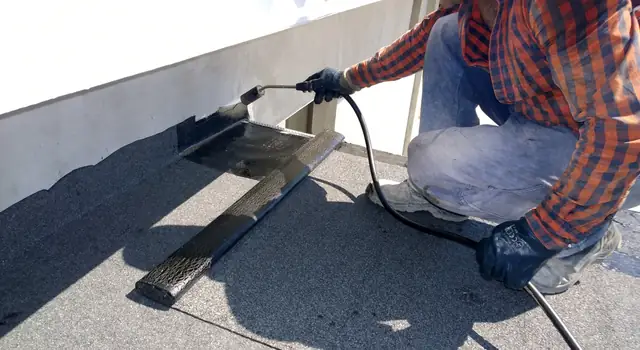
Mastic asphalt is a blend of bitumen, limestone powder and sand which, when heated, forms a dense, impermeable layer. It has been widely used in UK construction for decades, mainly on flat roofs, where it gives a seamless and robust surface able to withstand the UK's unpredictable weather.
The material is also used beyond roofing, for flooring, paving and tanking, which means waterproofing underground structures.
Buying a home with an older roof? Get a survey price for the home you are buying.
How long does a mastic asphalt roof last?
When properly installed and maintained, a mastic asphalt roof is long-lasting. Its resistance to wear and tear makes it suitable for both residential and commercial properties.
What are the advantages of mastic asphalt?
The main advantages are durability and waterproofing.
- Durability and longevity: a long life when properly installed and maintained.
- Waterproofing: it forms a continuous, seamless layer that prevents water ingress, which suits flat roofs where water pooling can be an issue and protects the structure below from water damage and leaks.
- Low maintenance: occasional cleaning and minor repairs are usually enough to keep it in good condition.
- Versatility: the same material is used for flooring, paving and tanking.
What are the disadvantages of mastic asphalt?
The main drawback is the complexity of installation.
- Installation complexity: the material must be heated to a high temperature and applied by skilled professionals to form a seamless, effective layer, which can make installation more time-consuming and costly than other materials.
- Initial cost: specialised equipment and skilled labour can make it more expensive to install than other options.
- Weight: it is a heavy material. The load must be considered at design stage so the building can support it, and in some cases structural reinforcement is needed, adding cost and complexity.
- Limited appearance options: it usually comes in a dark, matte finish that may not suit all architectural styles.
What defects and risks affect mastic asphalt roofs?
Poor installation or maintenance can lead to cracks, blisters and other defects that compromise the roof's integrity and waterproofing.
Thermal expansion and contraction
Mastic asphalt expands and contracts with temperature changes, particularly where temperatures fluctuate significantly. Over time this can lead to stress and damage. Proper installation techniques and expansion joints, gaps designed to absorb movement, help manage these effects.
Health and safety during installation
Heating the material to high temperatures poses risks to workers, including burns and inhalation of fumes, so protective equipment and safety protocols are needed. The bitumen can also release volatile organic compounds (VOCs) during heating, which may have health implications if not properly managed.
Environmental impact
The extraction and processing of bitumen contribute to greenhouse gas emissions and environmental degradation. The material is non-biodegradable, so it can persist in the environment and pose disposal challenges at the end of its life.
What are the best practices for a mastic asphalt roof?
- Use skilled, experienced contractors with a proven track record in mastic asphalt who follow industry standards and safety protocols.
- Make sure the roof design includes appropriate ventilation to promote airflow.
- Schedule periodic inspections for cracks, blisters and other defects, and repair promptly so minor issues do not escalate.
- Consider suppliers and contractors with sustainable practices, and options for recycling or repurposing the material at the end of its life.
What are the alternatives to mastic asphalt?
EPDM rubber, TPO, GRP fibreglass and modified bitumen are the main alternatives for flat roofs.
| Material | Key features described |
|---|---|
| EPDM rubber | Ethylene propylene diene monomer, a synthetic rubber with good waterproofing, flexibility and UV resistance; relatively easy to install and maintain |
| TPO | Thermoplastic olefin; reflects sunlight and resists UV radiation, chemicals and punctures |
| GRP fibreglass | Glass-reinforced plastic; lightweight, seamless, waterproof and resistant to UV radiation and chemicals, with various design options |
| Modified bitumen | Traditional bitumen combined with modern polymers; good waterproofing, and can be torch-applied, self-adhesive or cold-applied |
What to consider when choosing or buying with a mastic asphalt roof
- The roof's size, shape and structural capacity to carry the weight.
- The local climate and weather conditions.
- The higher initial cost against long-term durability and low maintenance.
- The ongoing cost and effort of inspections and timely repairs.
- Environmental concerns about the material.
Roofing experts and surveyors can assess a property's condition and recommend suitable roofing options, installation and maintenance.
What a survey can — and cannot — tell you
A building survey provides an informed assessment of the visible condition of a property. Inspections are non-intrusive and limited to areas that are accessible at the time of inspection.
For a mastic asphalt roof, a survey can identify visible defects such as cracks and blisters that compromise its waterproofing, and signs of water ingress below.
- The visible condition of the asphalt surface, including cracks and blisters.
- Signs of water pooling on the roof.
- Evidence of leaks or water damage to the structure below.
- Signs of condensation where ventilation may be inadequate.
However, there are limitations to what a survey can determine without intrusive investigation.
- Whether the structure was designed or reinforced to carry the weight of the asphalt.
- Whether expansion joints and installation techniques were adequate.
- The condition of hidden layers and structure beneath the asphalt.
Where higher-risk indicators are identified, further specialist or intrusive investigation may be recommended.
Frequently asked questions
What is mastic asphalt made of?
A blend of bitumen, limestone powder and sand, which forms a dense, impermeable layer when heated.
How long does a mastic asphalt roof last?
When properly installed and maintained, it is a long-lasting covering; its durability is its main advantage.
Why do mastic asphalt roofs crack?
Poor installation can lead to cracks and blisters, and expansion and contraction with temperature changes can cause stress and damage over time.
Is mastic asphalt heavy?
Yes. The building must be able to support the load, and in some cases structural reinforcement is needed.
Does a mastic asphalt roof need much maintenance?
It is relatively low-maintenance, with occasional cleaning and minor repairs usually enough, but periodic inspections for cracks and blisters are still needed.