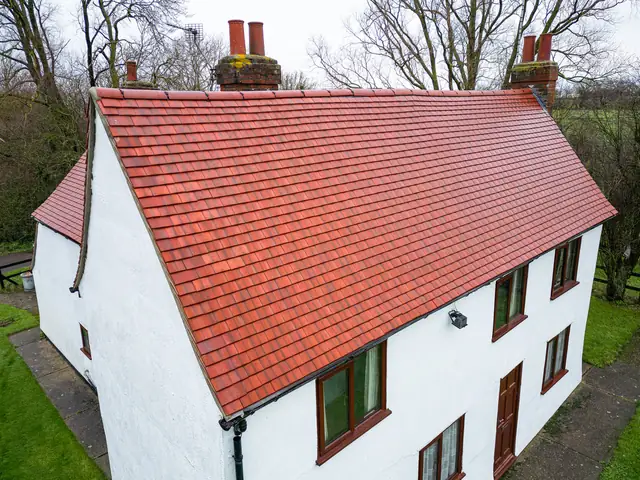

What is spray foam insulation?
Spray foam insulation is polyurethane combined with a foaming agent, sprayed into spaces in walls, ceilings and roofs, where it expands and hardens to provide heat insulation.
It is often presented as a solution to poor insulation, offering better heat retention and lower energy bills. Despite being an effective insulator, it can cause problems ranging from uneven application to trapped moisture leading to structural damage, and health hazards.
Buying a home with an older roof? Get a survey price for the home you are buying.
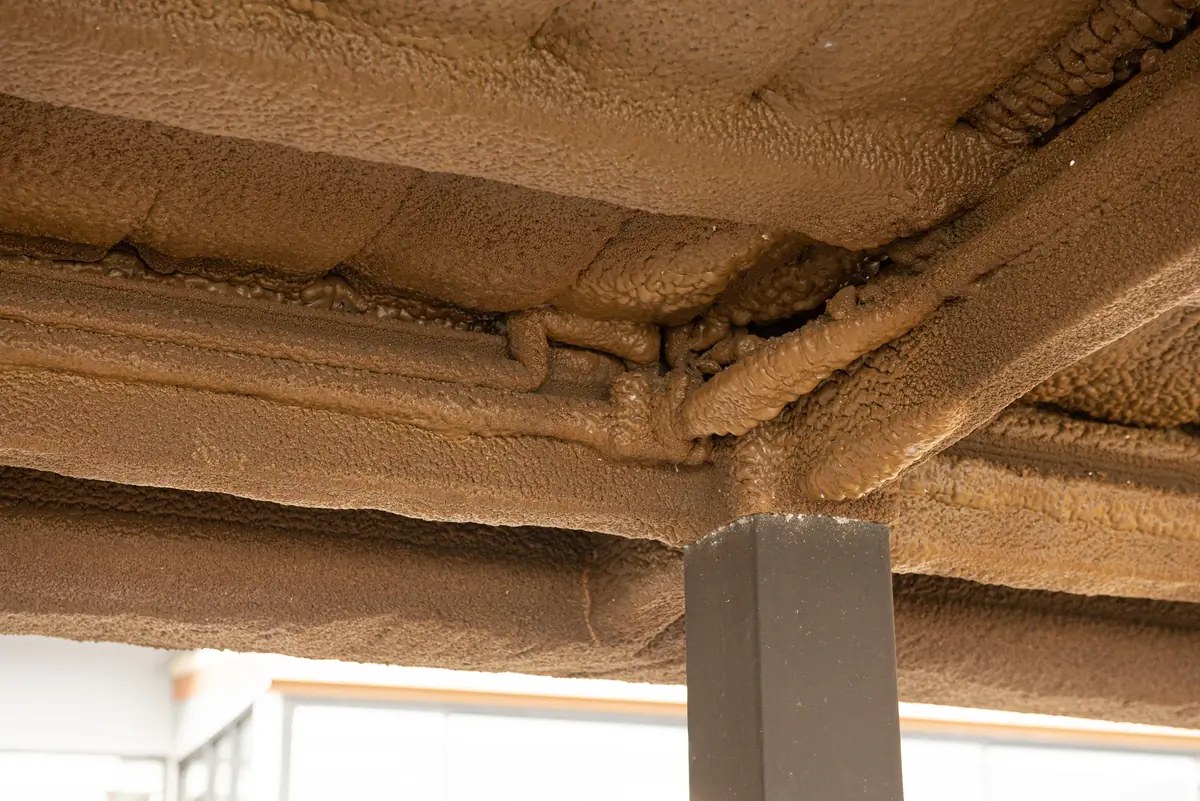
What are the risks of spray foam in a roof?
The risks range from health hazards to structural damage and fire.
Roof damage
Spray foam can trap moisture, which over time can cause wood rot and lead to severe structural problems. Once sprayed, the foam is extremely difficult to remove without damaging the roof structure.
Health hazards
As a chemical product, spray foam releases volatile organic compounds (VOCs), chemicals given off as gases. These can cause respiratory problems or skin irritation, particularly during the first 24 hours after application, when the release of VOCs is highest.
Fire risk
Certain types of spray foam insulation can be flammable, raising the risk of fire.
Does spray foam affect selling or mortgaging a house?
It can. Spray foam can affect a property's value and saleability, and some mortgage lenders may be hesitant to approve loans for properties with a history of spray foam problems.
Even after removal, traces of spray foam left on the rafters can affect saleability. The marks can raise questions about structural damage and make the property less appealing to buyers.
Can spray foam insulation be removed?
It can, but removal is a complex and meticulous process that needs professional expertise.
Incorrect removal can damage the roof or leave the clearance incomplete, with chemical residue or traces left behind that could make related problems worse in future.
What to look for when viewing
- Spray foam in the roof space.
- Uneven application of the foam.
- Marks or traces of foam left on rafters where it has been removed.
- Signs of trapped moisture or rot in roof timbers.
What to do next
- Have the property inspected by a professional surveyor, who can identify spray foam and the issues associated with it.
- If removal is considered, use professionals, as incorrect removal can damage the roof or leave residue behind.
What a survey can — and cannot — tell you
A building survey provides an informed assessment of the visible condition of a property. Inspections are non-intrusive and limited to areas that are accessible at the time of inspection.
A detailed inspection can reveal underlying issues such as spray foam insulation in the roof space and give guidance on addressing them.
- The presence of spray foam in accessible roof spaces.
- Uneven application of the foam.
- Visible traces of foam left on rafters after removal.
- Visible signs of moisture or rot in exposed timbers.
However, there are limitations to what a survey can determine without intrusive investigation.
- The condition of timbers concealed beneath the foam.
- The type of foam and how flammable it is.
- Whether chemical residue remains after removal.
Where higher-risk indicators are identified, further specialist or intrusive investigation may be recommended.
Frequently asked questions
What is spray foam insulation made of?
Polyurethane combined with a foaming agent, which expands and hardens once sprayed.
Why is spray foam a problem in a roof?
It can trap moisture, which over time can cause wood rot and severe structural problems, and it is extremely difficult to remove without damaging the roof structure.
Is spray foam insulation a health risk?
It releases volatile organic compounds, which can cause respiratory problems or skin irritation, particularly in the first 24 hours after application.
Will a mortgage lender accept spray foam?
Some mortgage lenders may be hesitant to approve loans for properties with a history of spray foam problems.
Does removing spray foam solve the problem?
Not always. Incorrect removal can damage the roof or leave residue, and traces left on rafters can still raise questions about structural damage.