
What causes efflorescence on bricks?
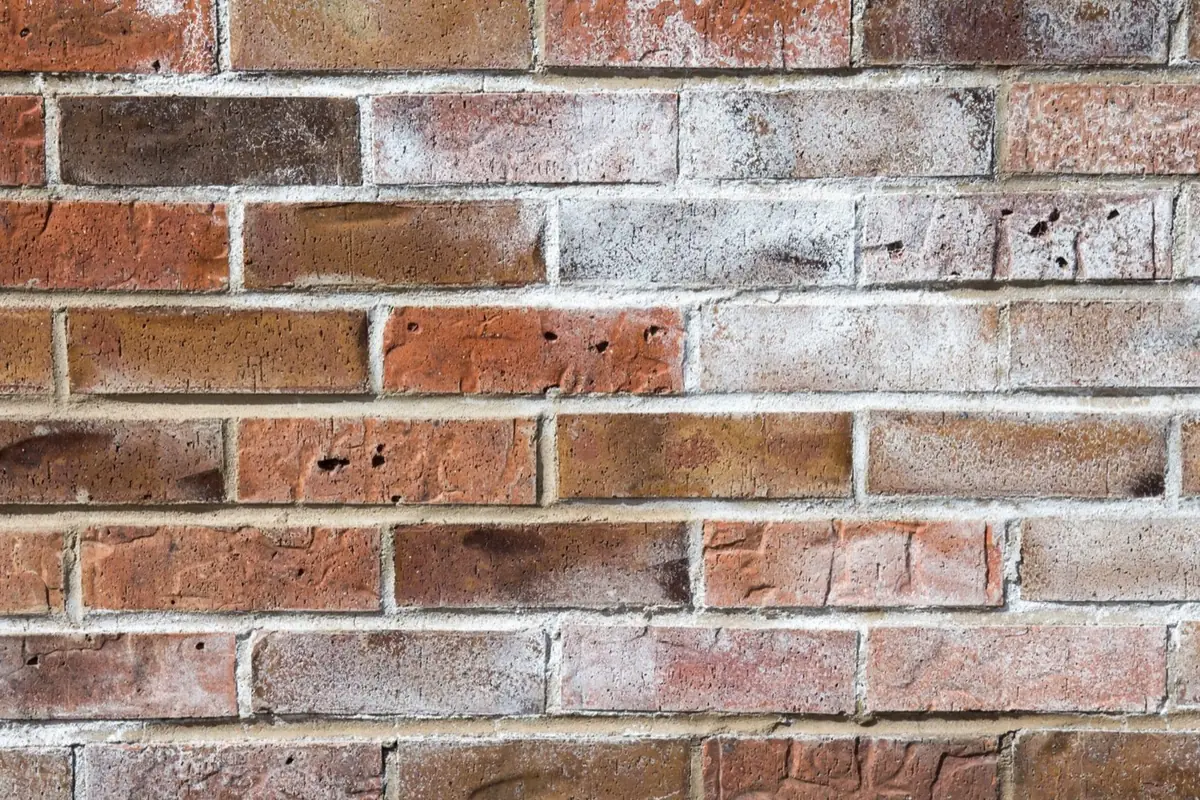
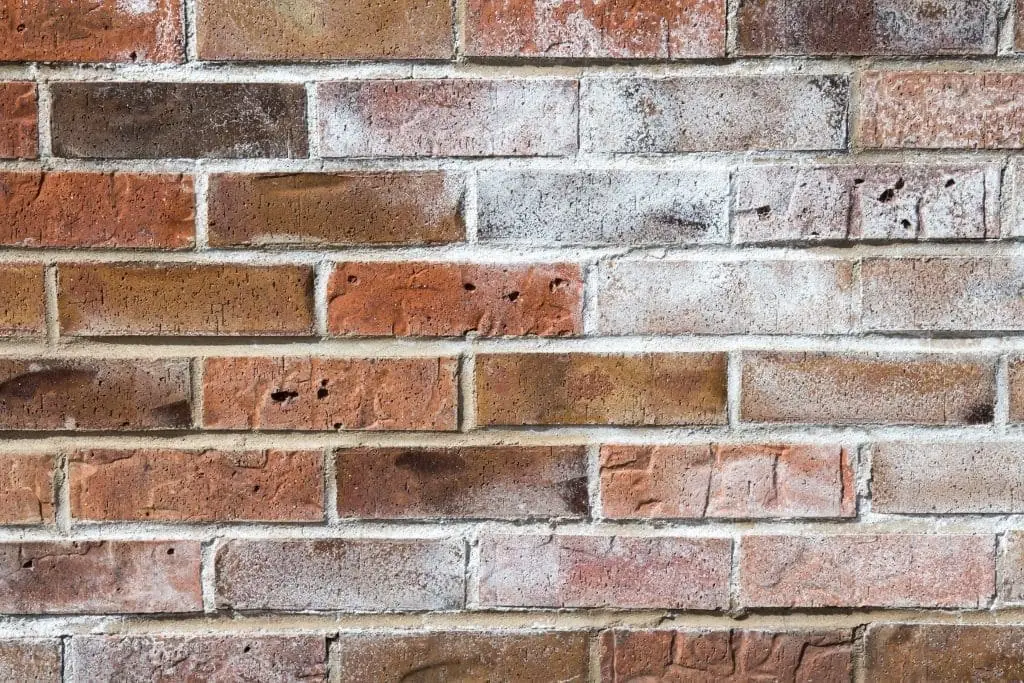
Efflorescence is caused by moisture carrying dissolved salts to the surface of brickwork, where the water evaporates and the salts crystallise into a white residue.
Bricks can contain these salts, and they can pick up more from materials such as mortar or from the ground. The process runs in three stages:
- Moisture finds its way into the bricks and dissolves the salts.
- The water moves to the surface and evaporates.
- The salts left behind dry and crystallise, forming the white residue.
Worried about damp? Get a survey price for the home you are buying.
How can efflorescence be prevented?
Efflorescence is prevented by keeping water away from brickwork and limiting the salts in it.
- Drainage: water should not be allowed to stay around brick structures. Working gutters and downpipes matter, and water pooling around walls is a sign that action is needed.
- Routine maintenance: inspecting brickwork regularly and dealing with cracks or gaps straight away keeps moisture out, significantly reducing the risk.
- Materials: when building or repairing, bricks and mortar with a low soluble salt content make a difference in the long run.
What to look for when viewing
- A white, powdery substance on brick surfaces.
- Gutters and downpipes that are blocked, leaking or not working.
- Water pooling around the base of walls.
- Cracks or gaps in the brickwork or mortar.
- Signs of leaks or rising damp near the affected brickwork.
How is efflorescence removed?
Efflorescence can often be removed by dry brushing with a soft brush followed by a gentle rinse. The full approach is:
- Clean gently: dry brush the area with a soft brush, then rinse gently.
- Repoint if the mortar is the source: where the mortar is supplying excessive salts, repointing (replacing old mortar with new) using a low-salt mortar hinders future efflorescence.
- Deal with the moisture: moisture is the main cause, so its sources, such as leaks or rising damp, should be located and addressed promptly.
What a survey can — and cannot — tell you
A building survey provides an informed assessment of the visible condition of a property. Inspections are non-intrusive and limited to areas that are accessible at the time of inspection.
Where efflorescence is present, a survey can point to the likely sources of moisture behind it, so that the cause is dealt with rather than just the deposit.
- Visible salt deposits on brickwork and where they occur.
- The condition of gutters and downpipes.
- Signs of water pooling around walls.
- Cracks or gaps in brickwork and the condition of the mortar.
- Visible signs of leaks or rising damp.
However, there are limitations to what a survey can determine without intrusive investigation.
- The salt content of the bricks and mortar.
- Moisture within the wall that does not show at the surface.
- Deposits that have been recently cleaned off or are hidden by finishes.
Where higher-risk indicators are identified, further specialist or intrusive investigation may be recommended.
Frequently asked questions
What is the white powder on bricks?
It is likely efflorescence: crystalline salts left on the surface when water carrying dissolved salts evaporates from the brickwork.
Where do the salts in efflorescence come from?
Bricks can contain them, and they can pick up more from mortar or from the ground.
How do you remove efflorescence from brickwork?
Dry brush the area with a soft brush and rinse gently, and deal with the source of moisture so it does not return.
Will efflorescence come back?
It can if moisture keeps entering the brickwork, so leaks, rising damp and poor drainage should be addressed, and repointing with low-salt mortar helps where the mortar is the source.
How can efflorescence be prevented?
By keeping water away from brickwork with working gutters and downpipes, repairing cracks and gaps promptly, and using bricks and mortar with a low soluble salt content.