
How long does a zinc roof last?
With proper maintenance, a zinc roof can last between 80 and 100 years.
The lifespan comes from zinc's natural properties: its resistance to corrosion and its ability to form a protective patina over time.
How does zinc perform as a roof covering?
Zinc is a durable, corrosion-resistant and malleable material, which means it can be shaped and moulded without losing its core properties. Zinc roof coverings have become increasingly popular in the UK for their durability, appearance and environmental benefits.
- Weather resistance: zinc is highly resistant to heavy rain, snow and wind. Its non-porous surface does not absorb water, reducing the risk of leaks and water damage.
- Flexibility: zinc can expand and contract with temperature changes, which helps prevent cracks and other damage when it is correctly installed.
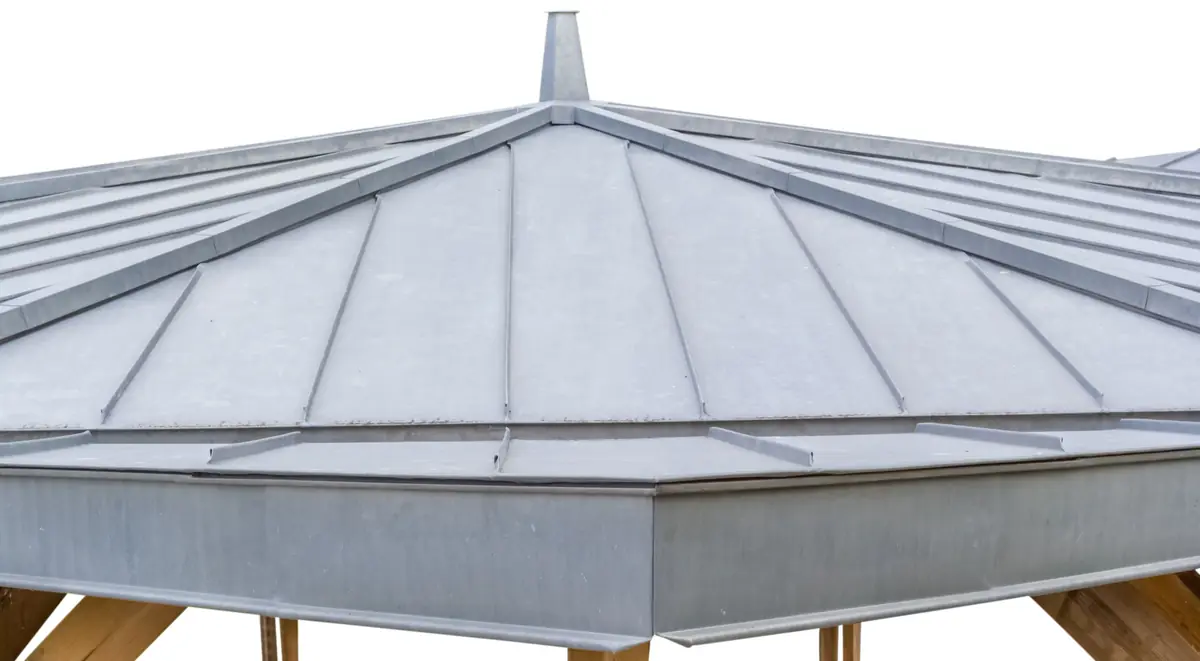
- Appearance: zinc can be shaped to fit architectural styles from traditional to contemporary, and the patina adds character to each roof.
- Weight: zinc is relatively lightweight compared with other metal roofing such as steel or copper.
- Environmental benefits: zinc is 100% recyclable, and its long lifespan reduces the need for replacements.
Buying a home with an older roof? Get a survey price for the home you are buying.
What are the common defects in zinc roofs?
The typical defects in zinc roofs come from movement, moisture and reactions with other metals. Like any material, zinc has its vulnerabilities.
- Thermal movement: zinc expands and contracts with temperature changes. If it is not installed correctly, this can lead to warping or buckling.
- Under-ventilation: inadequate ventilation can lead to moisture accumulation, which may affect the zinc's performance.
- Galvanic corrosion: zinc is a reactive metal. Direct contact with certain other metals, such as copper or iron, can cause galvanic corrosion (corrosion caused by contact between different metals) that damages the roof.
- Improper installation: zinc roofing requires specialised skills and not all roofing contractors have the expertise. Poor installation can lead to leaks, poor ventilation and a reduced lifespan.
What can make a zinc roof corrode faster?
Although zinc is highly resistant to corrosion, some environmental factors can speed it up.
- Coastal locations, where the high salt content in the air may make zinc roofs more susceptible to corrosion.
- Acidic rain, which can affect the patina layer and potentially lead to faster degradation.
- Contact with incompatible metals, as described above.
Regular inspections and maintenance can help reduce these risks.
What are the drawbacks of a zinc roof?
The main drawbacks are the initial cost, the need for a specialist installer and the weight on older structures.
- Initial cost: zinc roofs are more expensive to install than traditional materials such as concrete tiles.
- Installation skills: a qualified and experienced contractor is needed for the roof to be installed correctly.
- Weight: although zinc is relatively light, the weight of the roof should still be considered, especially on older buildings or structures with limited load-bearing capacity. A structural assessment may be necessary to confirm the building can support it.
How should a zinc roof be maintained?
Zinc roofs require minimal maintenance compared with other roofing materials, but regular inspections and occasional cleaning are still needed.
- Annual inspection: have a roofer check the roof at least once a year to spot early signs of defects such as cracks or corrosion, and deal with them promptly.
- Gutters and downpipes: keep them free from debris to prevent water pooling.
- Roof surface: keep it clean and free of debris to prevent water accumulation.
- Fasteners and seams: check that all fasteners and seams remain tight and in good condition.
- Metal contact: make sure no incompatible metals, such as copper or iron, come into contact with the zinc.
What should be considered when choosing a zinc roof?
Choosing a zinc roof starts with needs and budget and depends on finding a contractor with zinc experience.
- Assess needs and budget: consider the local climate, the architectural style of the home and long-term maintenance preferences.
- Select a qualified contractor: look for experience in zinc roofing, check credentials, ask for references and review previous work.
- Plan the installation: agree a detailed plan with timelines, materials and costs, and obtain any necessary approvals before work starts.
- Prepare the roof structure: inspect the existing structure and complete any repairs or reinforcement so it can support the new roof. Consider ventilation and insulation.
- Install the roof: the zinc sheets are measured, cut, secured to the roof structure and the joints sealed, using specialised tools. Inspections during installation help identify issues promptly.
- Maintain it: carry out regular inspections and keep the roof clean.
Reported examples include a London home where an ageing roof was replaced with zinc to suit a contemporary design, and a historic building in Edinburgh where zinc was chosen during restoration because it could be shaped to the building's architectural features. Looking ahead, new coatings and treatments may enhance patina formation, and zinc roofs can provide a stable and durable base for solar panels.
What to look for when viewing a property with a zinc roof
- Warping or buckling of the zinc, which can point to thermal movement from incorrect installation.
- Signs of corrosion, particularly where zinc meets other metals such as copper or iron.
- Cracks or other damage to the covering.
- Loose fasteners or open seams.
- Blocked gutters and downpipes, or water pooling.
- Signs of leaks or moisture that may indicate poor ventilation.
What a survey can — and cannot — tell you
A building survey provides an informed assessment of the visible condition of a property. Inspections are non-intrusive and limited to areas that are accessible at the time of inspection.
On a property with a zinc roof, a survey can record visible signs of the defects that most often affect this material, such as movement damage, corrosion and poor drainage, and indicate whether further investigation is needed.
- Visible warping, buckling, cracks or corrosion of the zinc covering.
- Contact between the zinc and other metals that could cause galvanic corrosion.
- The condition of visible seams, fasteners, gutters and downpipes.
- Visible signs of leaks or moisture.
However, there are limitations to what a survey can determine without intrusive investigation.
- Moisture accumulation from under-ventilation beneath the zinc, which may not be visible from outside.
- Whether the roof structure has the load-bearing capacity for the covering, which may need a structural assessment.
- Roof areas that cannot be safely seen or reached on the day.
Where higher-risk indicators are identified, further specialist or intrusive investigation may be recommended.
Frequently asked questions
How long does a zinc roof last?
With proper maintenance, a zinc roof can last between 80 and 100 years.
Does zinc react with other metals?
Yes. Zinc is a reactive metal, and direct contact with metals such as copper or iron can cause galvanic corrosion that damages the roof.
Are zinc roofs suitable near the coast?
Zinc roofs in coastal areas may be more susceptible to corrosion because of the high salt content in the air. Regular inspections and maintenance can help reduce the risk.
How often should a zinc roof be inspected?
A roofer should check the roof at least once a year to spot early signs of defects.
Why does a zinc roof change colour?
Exposure to the elements forms a patina of zinc carbonate, which can range from a shiny metallic finish to a matte grey or blue hue and protects the zinc from further corrosion.
Is zinc heavy?
Zinc is relatively lightweight compared with steel or copper roofing, but on older buildings or structures with limited load-bearing capacity a structural assessment may be necessary.