
Why do conservation areas and listed buildings matter when buying?
They matter because the law restricts what owners may alter without consent, and enforcement follows the building rather than the person who did the work. Conservation areas and listed buildings are governed by the Planning (Listed Buildings and Conservation Areas) Act 1990.
Carrying out unauthorised works to a listed building is a criminal offence. If a previous owner replaced windows, removed internal features or extended without the right consents, the local authority can require the new owner to put it right after completion.
Buyers commonly misunderstand three things:
- "It has been like that for years" does not make it safe. For listed buildings there is no time limit on enforcement against unauthorised works.
- Conservation area rules do not only affect the front of the house. Article 4 directions can also restrict windows, roofs, render and boundary treatments.
- The problem passes with the building. The current owner can be required to put unauthorised works right.
Reinstatement of a poorly altered listed interior can run to tens of thousands of pounds (figures given when this guide was first written). That is why the checks belong before exchange of contracts, while a buyer can still renegotiate or walk away.
Questions about the home you are buying? Get a survey price for the home you are buying.
What is a conservation area, and what is a listed building?
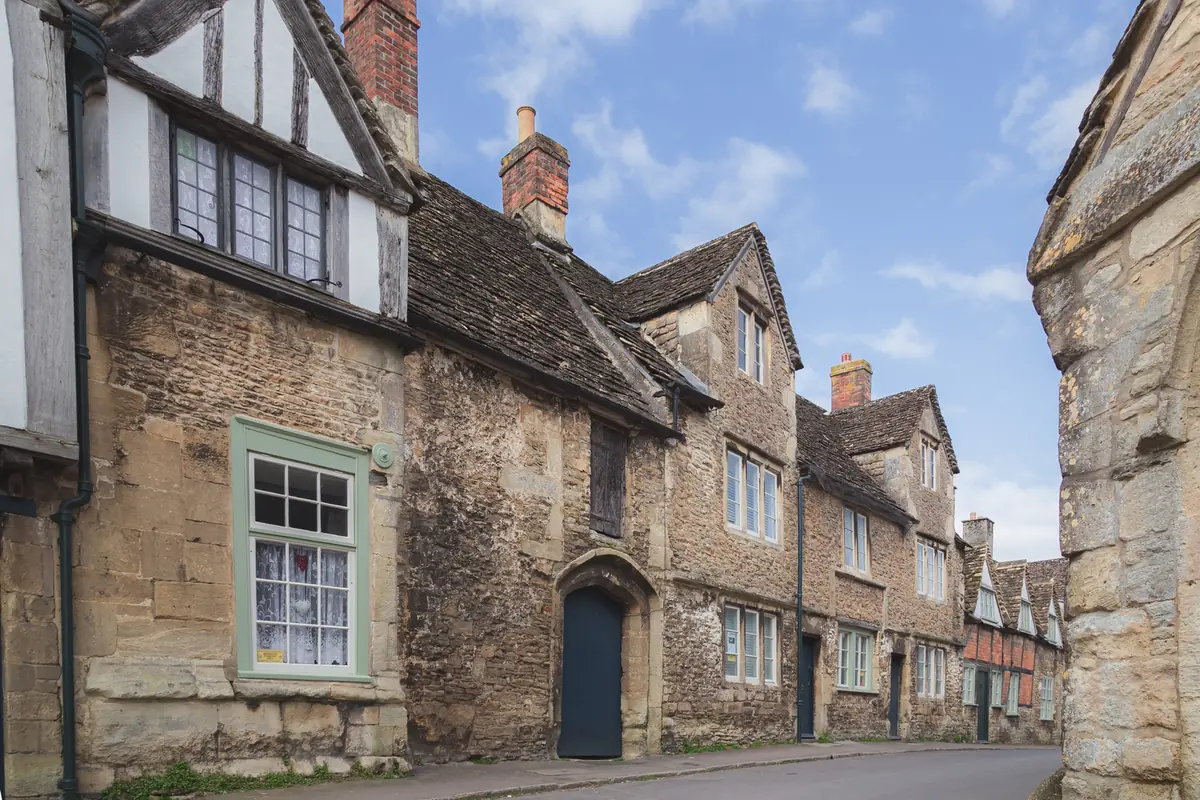
A conservation area is a district designated by the local planning authority for its special architectural or historic interest. Designation protects the character of the area as a whole: demolition is controlled, most trees are protected, and normal permitted development rights are reduced, sometimes removed almost entirely by an Article 4 direction (an order that withdraws specific permitted development rights). Planning documents may also call these "designated heritage areas" or simply "CA".
A listed building is an individual building on the National Heritage List for England, graded I, II* or II. Listing protects the whole building, interiors included, and in many cases boundary walls and outbuildings within its curtilage (the land and structures belonging to it), known as curtilage-listed structures.
Any address can be checked free on Historic England's National Heritage List, and conservation area status can be checked with the local council.
How do consent problems arise?
Most problems come from works carried out without consent, or beyond the consent granted. The usual patterns are:
Replacement windows and doors
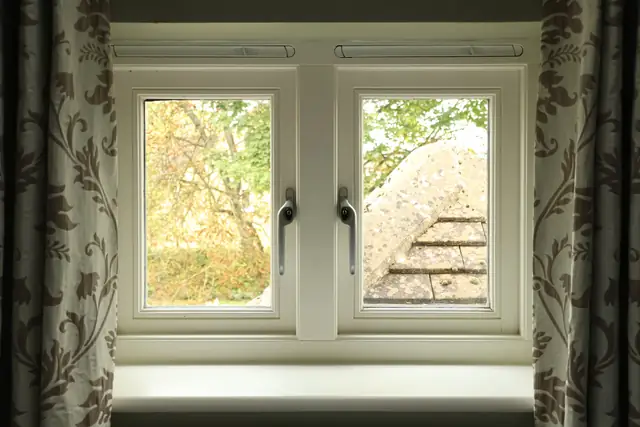
This is the most common breach. uPVC or off-the-shelf timber units installed in a listed building without consent, or in a conservation area covered by an Article 4 direction, can carry a reinstatement requirement, and genuine sash windows made to match the originals are expensive.
Extensions, dormers and outbuildings
Rear extensions, loft dormers and garden structures are sometimes built under permitted development rights that had in fact been removed by designation or an Article 4 direction, or built beyond the scope of a granted permission.
Internal alterations to listed buildings
Removed chimney breasts, stripped-out panelling or fire surrounds, opened-up rooms and replaced staircases are typical. Many owners do not realise that listing covers interiors, so these works are often done in good faith and never documented.
Works that drifted from an approved consent
Consent was obtained, but the finished works differ from the approved drawings: a larger dormer, different materials, an extra rooflight. A deviation from the conditions is still a breach.
Inappropriate repairs
Not always a consent issue, but a costly one. Hard cement pointing and renders on soft historic brick, modern paints on breathable walls, and concrete roof tiles overloading old timbers all cause long-term damage that a detailed survey should identify.
What to look for when viewing
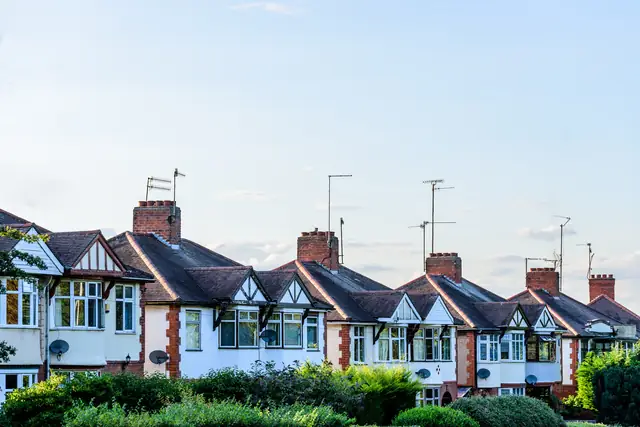
- uPVC or obviously modern windows in a period terrace where the neighbours retain timber sashes.
- Recent-looking extensions, dormers or rooflights.
- Missing chimney breasts, with breasts removed downstairs and stacks retained above.
- In a listed building: modern open-plan layouts, replacement staircases and stripped period detail.
- Satellite dishes, flues or solar panels on prominent elevations.
What should buyers ask the seller and request?
Buyers should ask what was done, whether it was consented, and see the paperwork. Questions for the seller:
- What works have been carried out, by whom, and when?
- Was listed building consent or planning permission obtained for each of them?
- Has advice ever been sought from the council's conservation officer, and what was said?
- Has the council ever raised an enforcement query?
Documents to request:
- Listed building consents and planning permissions, with the approved drawings.
- Building regulations completion certificates and FENSA/CERTASS certificates for windows.
- The local authority planning history. The solicitor's local search will also confirm conservation area status and any Article 4 direction; many owners do not know, so the seller should not be relied on for this.
- Any indemnity insurance policies already in place, read for what they actually cover.
When should a buyer worry?
Concern rises where alterations look recent and the paperwork is missing. No single feature is conclusive: an odd window or one missing fireplace proves nothing on its own. Judgement comes from the combination of physical evidence and the paper trail.
| Usually lower risk | Potentially higher risk |
|---|---|
| Alterations with matching consents and approved drawings on file | Recent-looking alterations with no paperwork, or drawings that do not match what was built |
| Works that clearly pre-date the building's listing or the area's designation | A listed interior substantially modernised with no consent record |
| Like-for-like repairs in appropriate materials (repairs generally do not need consent) | A seller offering indemnity insurance in place of documents they "can't find" |
| An unlisted house in a conservation area with no visible alterations | Hard cement repairs to soft historic fabric, with early signs of damp or decay |
Which survey suits which situation?
Useful questions about the property are: How old is it, and is the construction conventional for its era? Are the alterations isolated or widespread? Do they appear historic or recent? Are repairs and consents documented? What would it cost if the council required reinstatement and nothing had been budgeted?
| Situation | Sensible next step |
|---|---|
| Unlisted house in a conservation area, no visible alterations, paperwork in order | Normal due diligence; a Level 2 Homebuyer Report may suffice for a simpler, well-maintained property |
| Period property in a conservation area with visible alterations or an Article 4 direction | A Level 3 Building Survey, with the solicitor obtaining the full planning history |
| Listed building, any grade | A Level 3 Building Survey from a surveyor familiar with historic fabric; Level 2 is rarely appropriate |
| Listed building with undocumented alterations | A Level 3 survey plus specialist heritage or planning advice before exchange |
| Confirmed breaches with unquantifiable reinstatement costs | Reconsider the purchase unless the price genuinely reflects the risk |
What to do next if a problem is found
- Establish the likely cause and extent: which works were done and whether they needed consent.
- Understand the consequences: enforcement risk, reinstatement scope, insurability and mortgageability.
- Obtain suitable further investigation: a heritage consultant, structural engineer or retrospective consent advice as appropriate.
- Estimate the repair or reinstatement liability from real quotations, not guesses.
- Ask the solicitor about planning history, indemnity options and what any existing policy actually covers.
- Renegotiate, proceed or withdraw based on evidence. A documented liability is a fair basis for a price reduction.
An example from practice
In an anonymised case, a buyer instructed a Level 3 survey on a Grade II listed early-Victorian terrace in a London conservation area, initially concerned about cracking to the rear addition. The cracking proved to be historic and of limited significance, but the inspection identified replacement window units and a rear dormer inconsistent with the building's age, and no consents appeared in the planning record.
Because listed building enforcement carries no time limit, the buyer faced a potential reinstatement liability. The solicitor was advised to obtain the full planning history and quotations for conservation-grade reinstatement before exchange. With that evidence, the buyer renegotiated the price to reflect the risk and proceeded, a materially better outcome than discovering the issue after completion.
What a survey can — and cannot — tell you
A building survey provides an informed assessment of the visible condition of a property. Inspections are non-intrusive and limited to areas that are accessible at the time of inspection.
On a conservation area or listed property, a surveyor experienced with period property compares the building against its neighbours and against what the planning record says should be there. Where alterations are evident, the report identifies them and flags where consent evidence should be obtained, so the solicitor knows what to pursue.
- The external envelope: roof coverings, chimneys, brickwork and pointing, windows and rainwater goods.
- Window reveals and glazing patterns, brickwork toothing where extensions meet original walls, and rooflines.
- The interior: floors, walls, ceilings, internal joinery, plasterwork and visible period features.
- Whether repair materials are compatible with the original construction.
- The immediate setting.
However, there are limitations to what a survey can determine without intrusive investigation.
- Concealed areas, such as under fitted floor coverings, behind panelling or within sealed roof voids, cannot be opened up.
- A surveyor cannot legally confirm whether consent was granted; that is a matter for the conveyancer's searches.
Where higher-risk indicators are identified, further specialist or intrusive investigation may be recommended.
For listed buildings and altered period property, a Level 3 Building Survey (or Level 3+ where intrusive follow-up matters most) is normally the appropriate level. A Level 2 Homebuyer Report is designed for conventional, unaltered modern homes and rarely suits listed property. The rules described here are those applying in England.
Frequently asked questions
Is a buyer liable for unauthorised work done by a previous owner?
In effect, yes. Enforcement action attaches to the property, so the current owner can be required to put unauthorised works right, and for listed buildings there is no time limit on enforcement against unauthorised works.
Can windows be replaced in a conservation area?
Often, but not always without permission. In many conservation areas an Article 4 direction removes permitted development rights for windows on visible elevations, and in a listed building window replacement almost always needs listed building consent, so check with the local planning authority first.
Is consent needed to change a listed building's interior?
Yes, if the works affect its special architectural or historic interest. Removing chimney breasts, panelling or staircases and opening up rooms typically require listed building consent; like-for-like repair generally does not.
Can you get a mortgage on a listed building?
Usually. Mainstream lenders routinely lend on Grade II properties, but unusual construction or unresolved consent issues can complicate matters, lenders may require a full survey, and unauthorised alterations flagged in searches can delay or derail an application.
Is indemnity insurance enough protection against missing consents?
Sometimes, but it is narrower than buyers assume. It covers the financial consequences of enforcement, not the physical defects, and it is typically invalidated if the council is contacted about the works.
Does buying in a conservation area affect running costs?
It can. Maintenance and alteration costs tend to be higher because appropriate materials are needed, and these should be budgeted for.