
If you are buying a house that has been extended, altered or had a conservatory turned into living space, your legal adviser or lender may ask for paperwork to prove the work was done properly. Two documents often get confused: the Building Regulations completion certificate and the Professional Consultant's Certificate, often called a PCC. They do different jobs, and knowing which one applies can save you time, money and a delayed purchase.
What is a Building Regulations completion certificate?
A completion certificate is issued by building control, either the local authority or an approved inspector, once building work has been inspected and found to meet the Building Regulations. It covers work such as extensions, loft conversions, structural alterations, removing chimney breasts and converting a conservatory into a habitable room.
It confirms that the work met the regulations in force at the time, including structure, fire safety, drainage and energy efficiency. It does not guarantee the quality of the workmanship, and it is not a warranty.
What is a Professional Consultant's Certificate?
A Professional Consultant's Certificate is a mortgage lender requirement. It applies to a newly built home, or a building converted into a new home, within the last ten years that does not have a structural warranty from a provider such as NHBC, Premier Guarantee or LABC Warranty.
Under the UK Finance Lenders' Handbook, a qualified professional must have monitored the build at key stages and signed the certificate. That professional carries liability for the work for six years. A PCC cannot simply be produced at the end: the consultant needs to have been appointed at the start and to have inspected the work as it went along.
What counts as a conversion?
In lending terms, a conversion means creating a new home from something that was not one before. Examples include a barn turned into a house, a commercial building turned into flats, or a house split into separate flats.
Adding an extension, or turning a conservatory into part of your kitchen or living room, is an alteration to an existing home. It is not a conversion in this sense.
Which one do you need?
Buying a home that has been altered? Get a survey price for the home you are buying.
You are more likely to need a PCC, or an approved structural warranty, if you are buying:
- a newly built house from a small developer or self-builder
- a flat or house formed by converting a non-residential building
- a property less than ten years old with no NHBC or similar warranty
Individual lenders can set their own conditions, so your legal adviser should always confirm requirements with your lender.
A common example: the converted conservatory
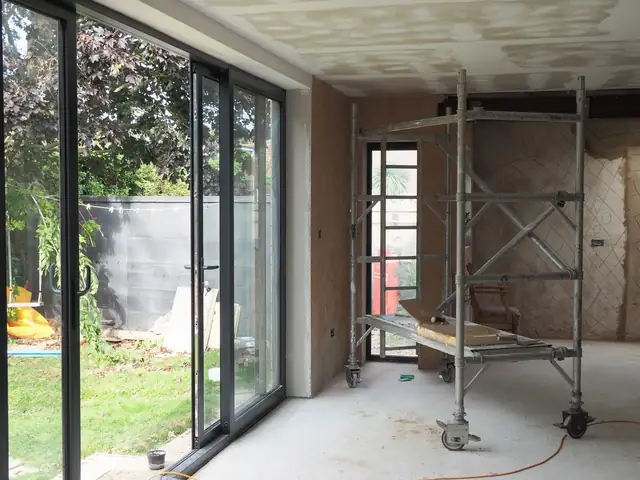
We often inspect houses where an old conservatory has been opened up to become part of the kitchen or dining area, but the original polycarbonate or glazed roof has been kept. Once a conservatory becomes habitable space, building control will generally treat it as an extension, and it must meet the energy efficiency requirements of Approved Document L.
A polycarbonate roof is unlikely to meet those requirements. If no completion certificate can be produced, you may need to budget for upgrading the roof, either to an insulated double glazed roof with an appropriate U-value or to an insulated flat roof, and to obtain building control approval for the work. These costs are worth knowing before you exchange contracts, as they may give you grounds to renegotiate.
What happens if there is no completion certificate?
If the seller cannot provide a completion certificate, your legal adviser may suggest:
- applying to the local authority for a regularisation certificate, which may involve opening up parts of the work for inspection
- an indemnity insurance policy, which protects against enforcement action by the local authority but does not make the work safe or compliant
- obtaining quotations for any work needed to bring the alteration up to standard, and taking those costs into account in your offer
How a home survey helps
A detailed RICS home survey will identify extensions and alterations, flag where Building Regulations approval should be checked, and point out work that may not meet current standards. At Flettons, our reports are written by a real expert, specific to your building, so you know exactly what to ask your legal adviser and what to do next.
If you are buying a property that has been extended or altered, get in touch with Flettons, regulated by the Royal Institution of Chartered Surveyors, to book your survey.